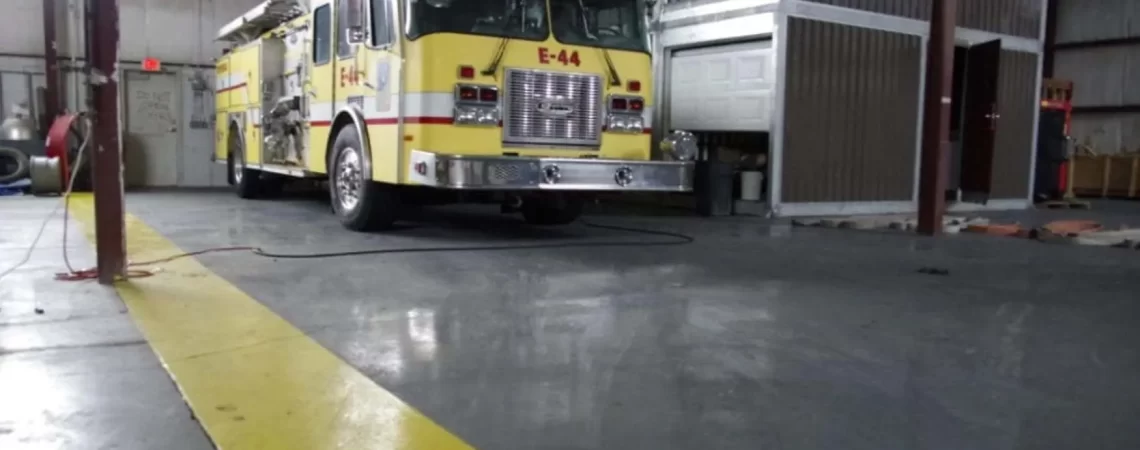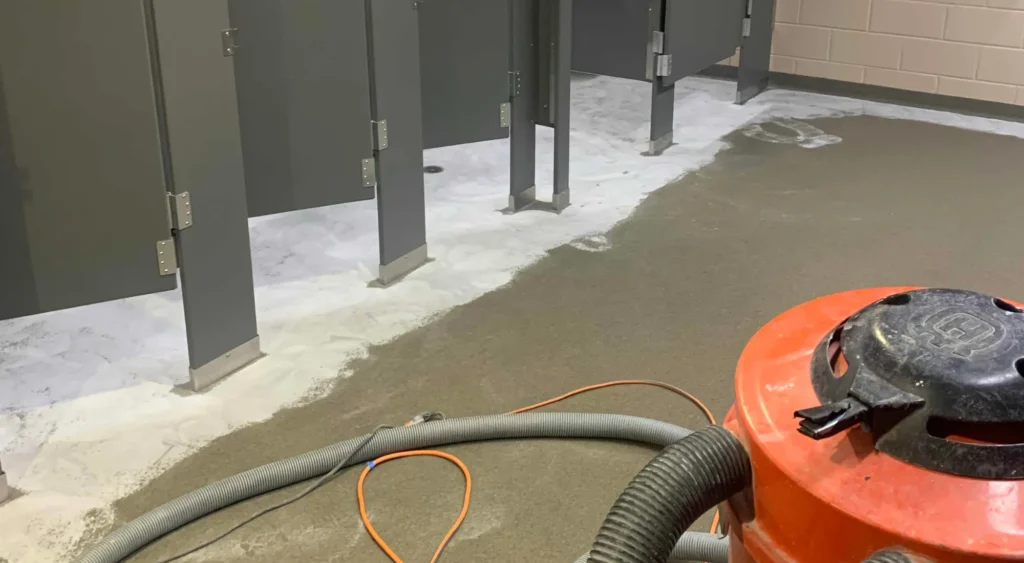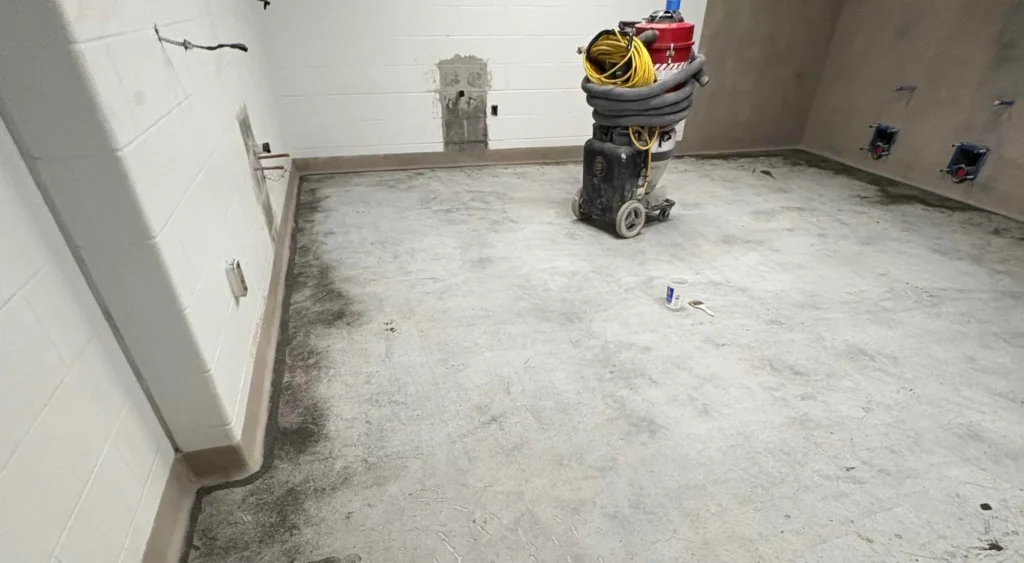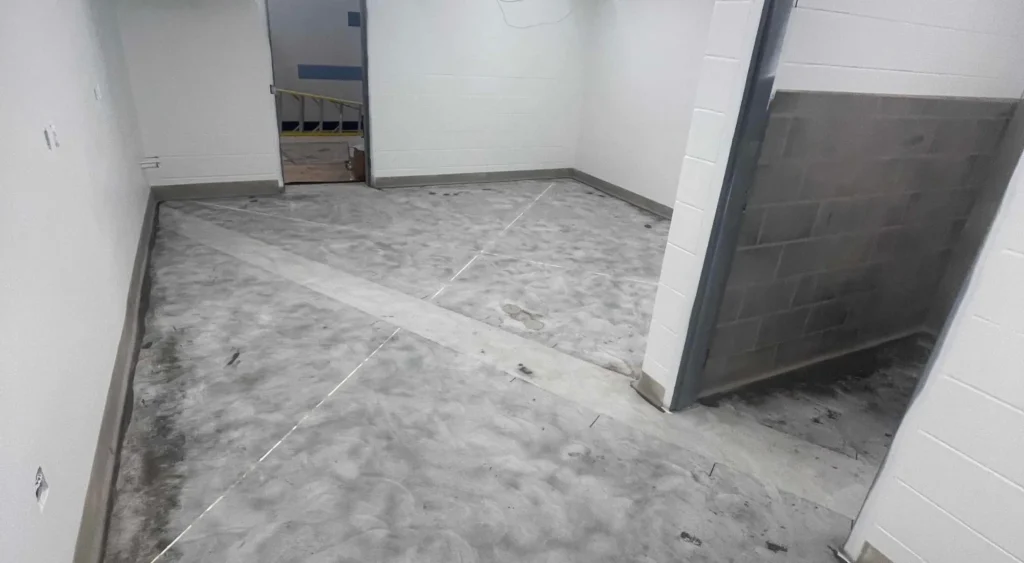
How Long Does Polished Concrete Last in a Commercial Space?
When you’re considering flooring options for your commercial space, durability ranks right up there with appearance.
Polished concrete has become a popular choice because it offers a sleek, professional look while still standing up to heavy foot traffic, equipment, and everyday wear. But how long does polished concrete actually last in a commercial environment?
With proper installation, maintenance, and care, polished concrete floors can provide decades of reliable performance. Here, we explore the typical lifespan of polished concrete in commercial spaces, three factors that affect its longevity, and what you can do to keep your floors looking their best for years to come.
Table of Contents
- How Long Does Polished Concrete Last?
- What Actually Wears Out: The Concrete vs. the Sealer
- 3 Factors That Affect How Long Polished Concrete Lasts
- How Often Do You Need To Reseal Polished Concrete?
- What Causes Polished Concrete To Fail?
- Considering Polished Concrete for Your Commercial Floors? Get a Realistic Lifespan Estimate From Treadwell
How Long Does Polished Concrete Last?
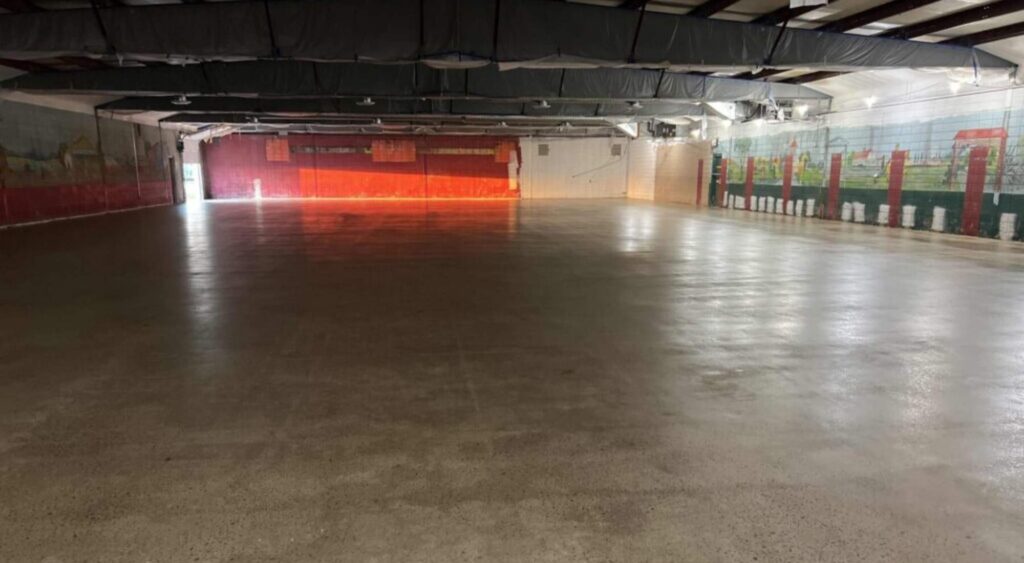
Polished concrete can last indefinitely, as long as it’s properly maintained.
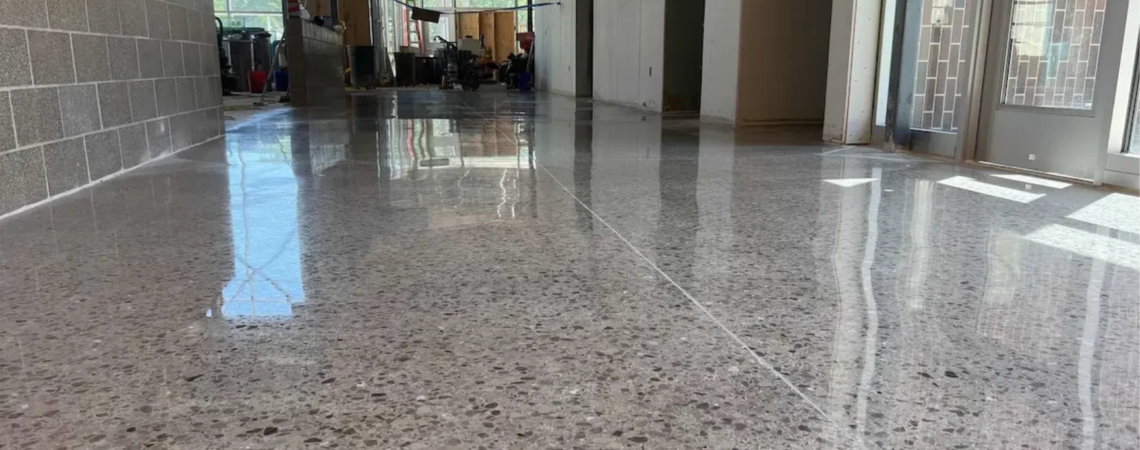
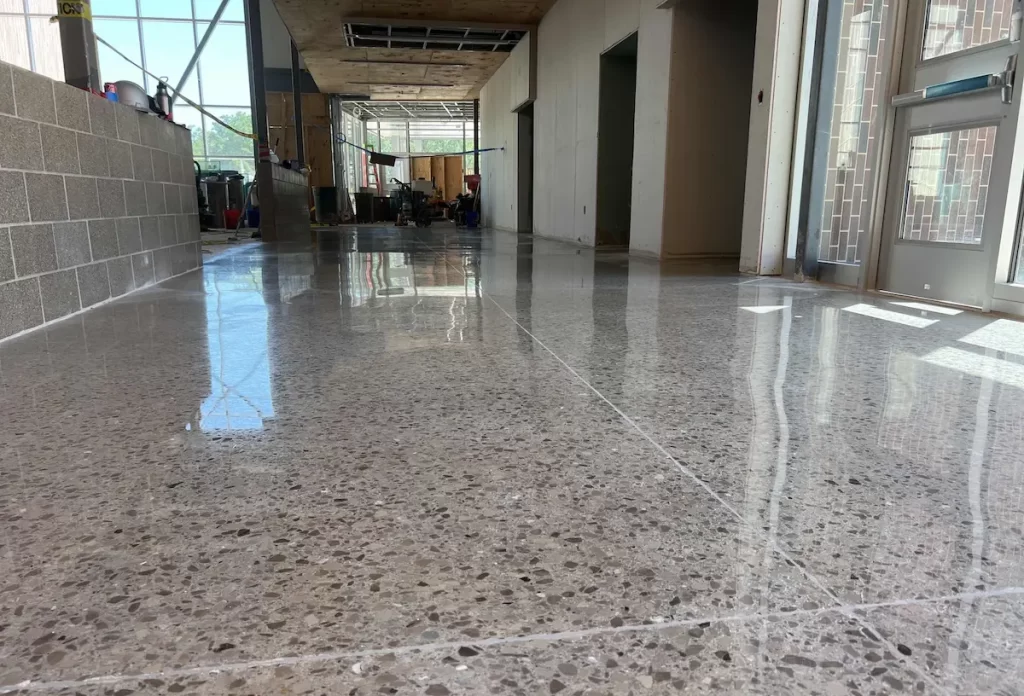
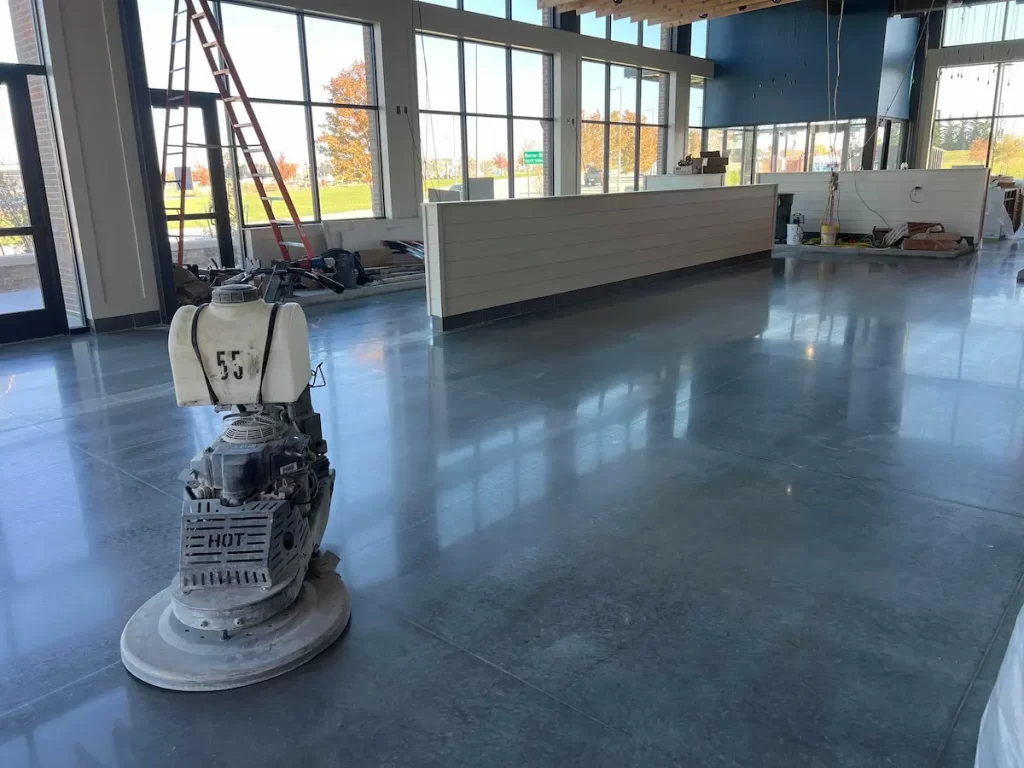
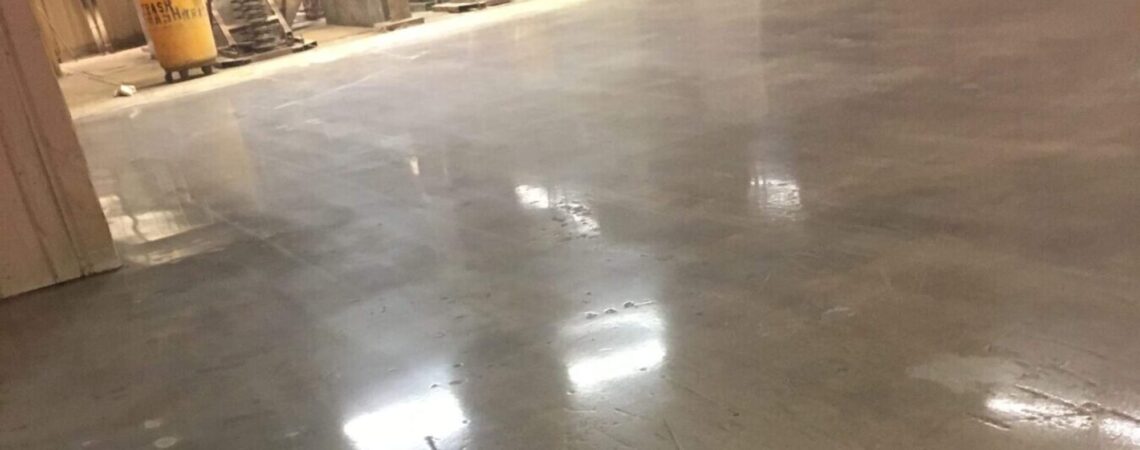
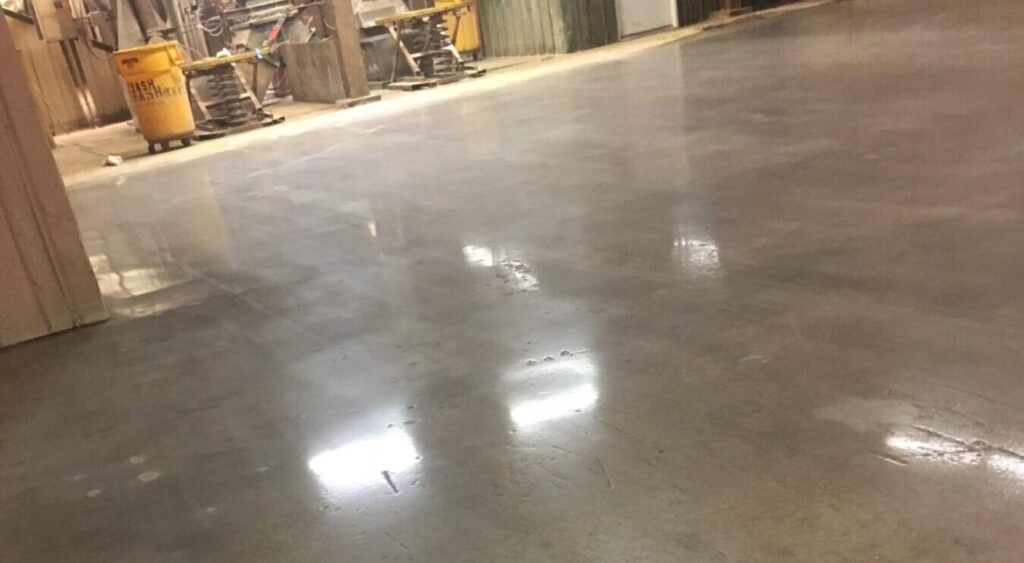
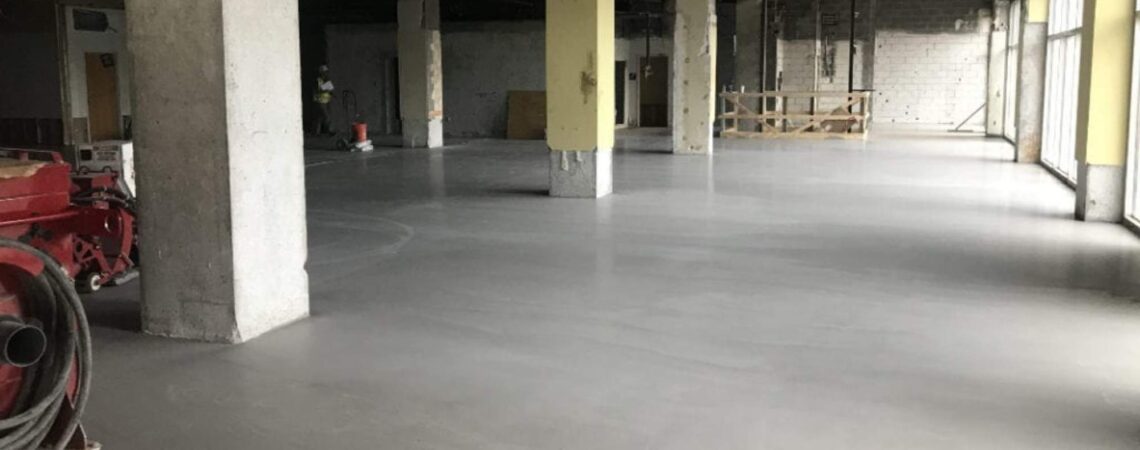
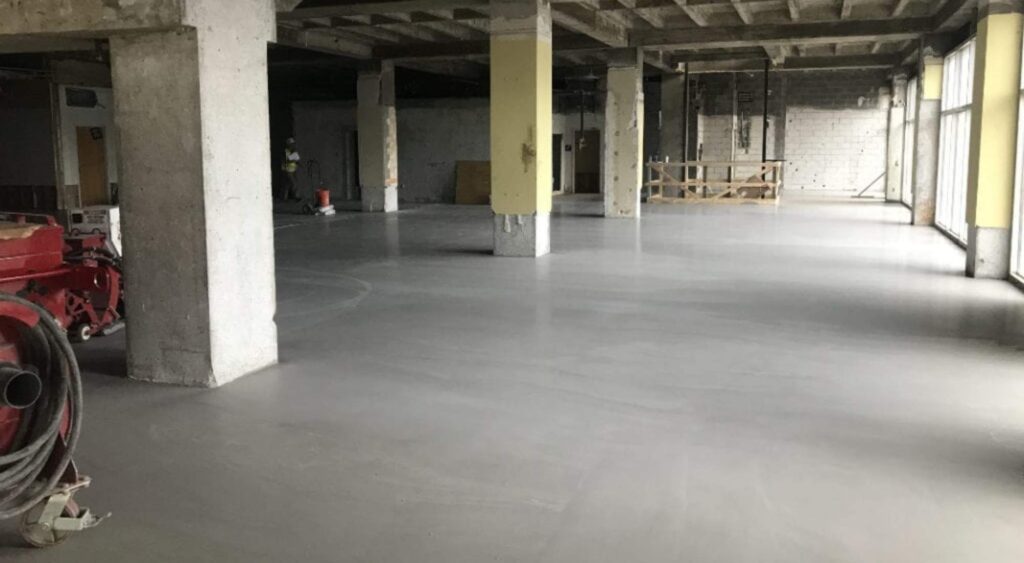
The process of creating polished concrete floors isn’t as simple as just placing a coating on top of your slab. It’s a refining of the slab itself, achieved by running resin-bonded diamond tooling across the surface in progressive grits, from coarse to fine.
It’s similar to sanding wood: each pass removes a little more material to reveal a smoother, more reflective surface underneath. Once the process is complete, you’re left with a durable surface that won’t peel, flake, or degrade the way a topical coating can.
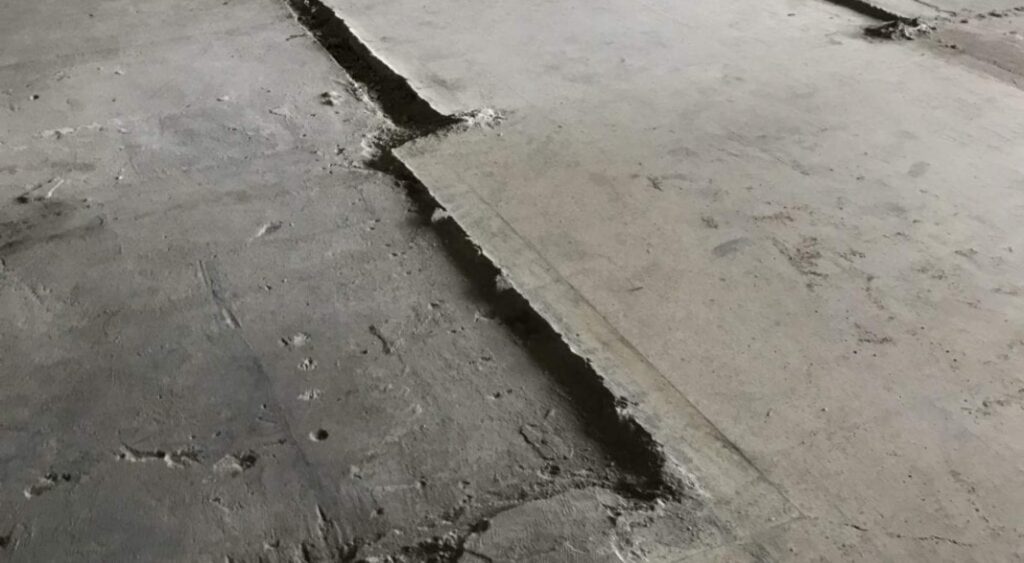
But lasting “indefinitely” comes with conditions. The floor’s structural life still depends on the integrity of the concrete slab underneath, and the surface still needs regular care to keep performing the way it did on day one. Those two things are what separate a floor that looks good for 30 years from one that needs early restoration.
Every slab and every facility carries different wear factors. Contact Treadwell for an assessment of your space and a straight answer on what your floor’s lifespan will look like.

What Actually Wears Out: The Concrete vs. the Sealer
Many flooring guides skip an important distinction: the polished surface is permanent, but the protective guard applied over it isn’t.
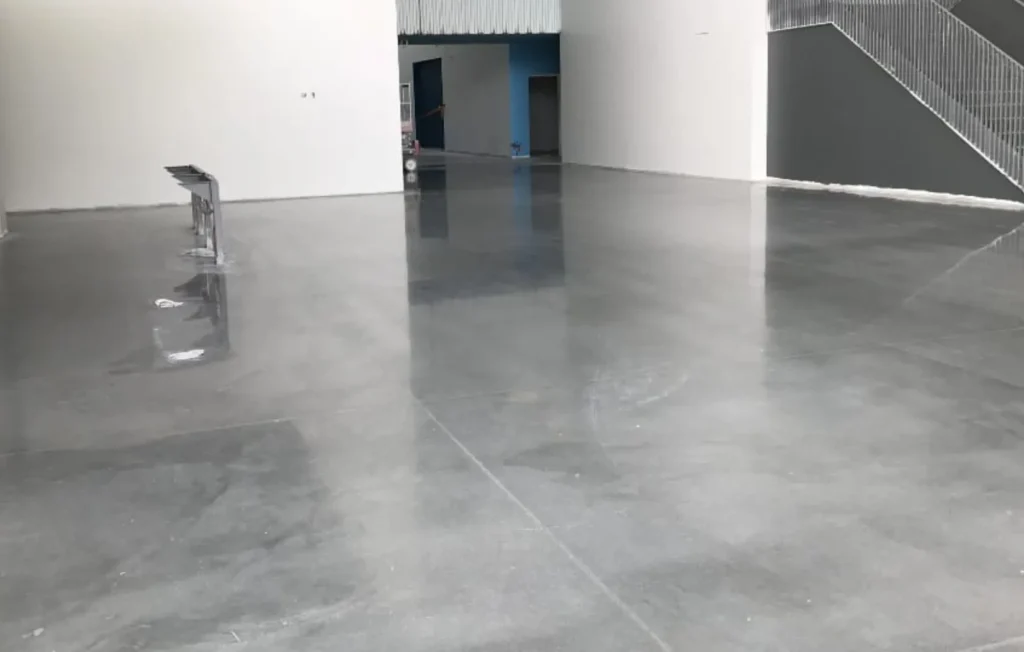
That protective layer, often a densifier followed by a sealer or guard product, is what shields the concrete from stains, moisture, and everyday wear. It’s also the part that wears down over time depending on your facility’s traffic and environment. When someone says a polished concrete floor “lost its shine,” they’re almost always describing sealer breakdown, not damage to the concrete itself.
The type of finish chosen during the original polishing process also affects how the floor looks and wears over time:
- Class A (cream finish): Minimal grinding, little to no aggregate exposure. The surface stays smooth and uniform.
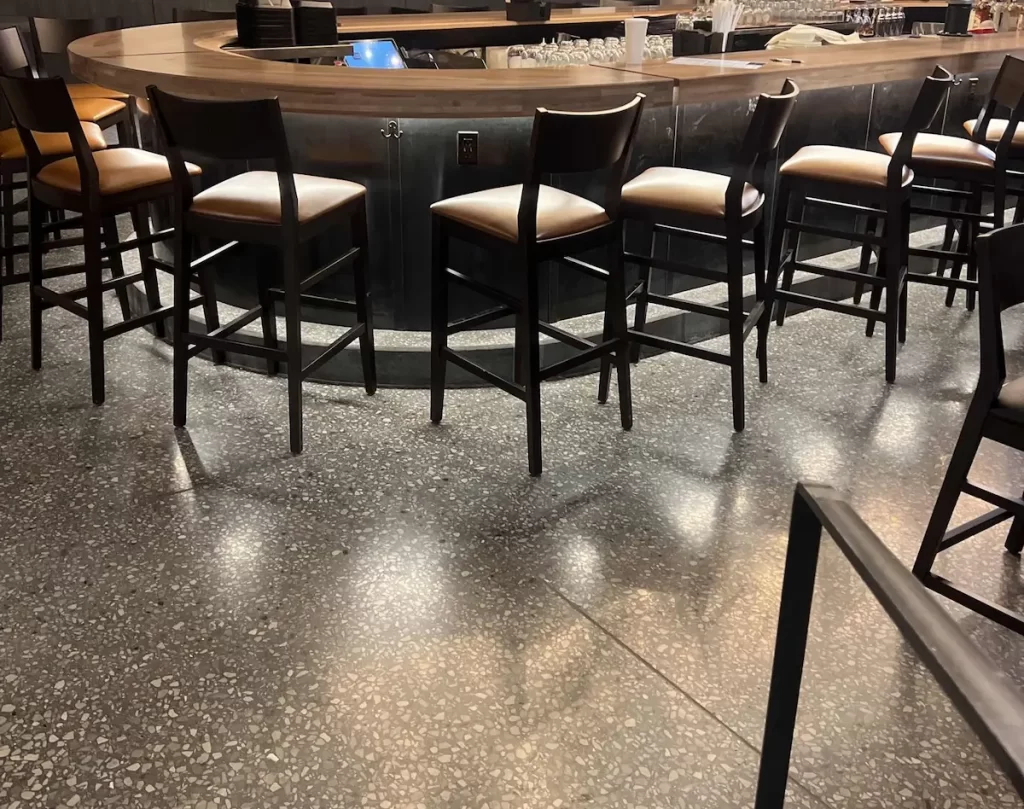
- Class B (salt and pepper): Fine aggregate exposed just below the surface, giving a more textured look.
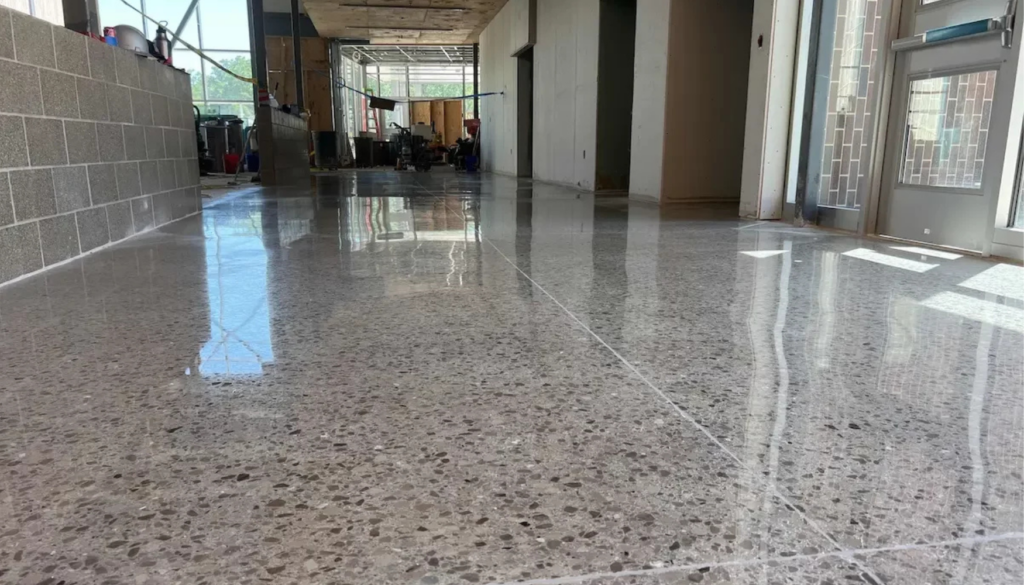
- Class C (full aggregate): Heavy grinding exposes larger stones within the slab, producing the most dramatic finish.
Since they’re baked into the concrete permanently, none of these classes wear out the way a sealer does.
When a floor looks dull or worn after a few years, the fix isn’t regrinding the entire surface. It’s refreshing the sealer and buffing the shine back. That distinction changes the whole maintenance conversation, since the expensive part, the polishing, rarely needs to be redone.
3 Factors That Affect How Long Polished Concrete Lasts
Lifespan can shift based on how a facility uses its floor day to day, and these three variables explain most of the difference between a floor that holds up for decades and one that needs attention every year.
#1: Traffic Level and Business Type
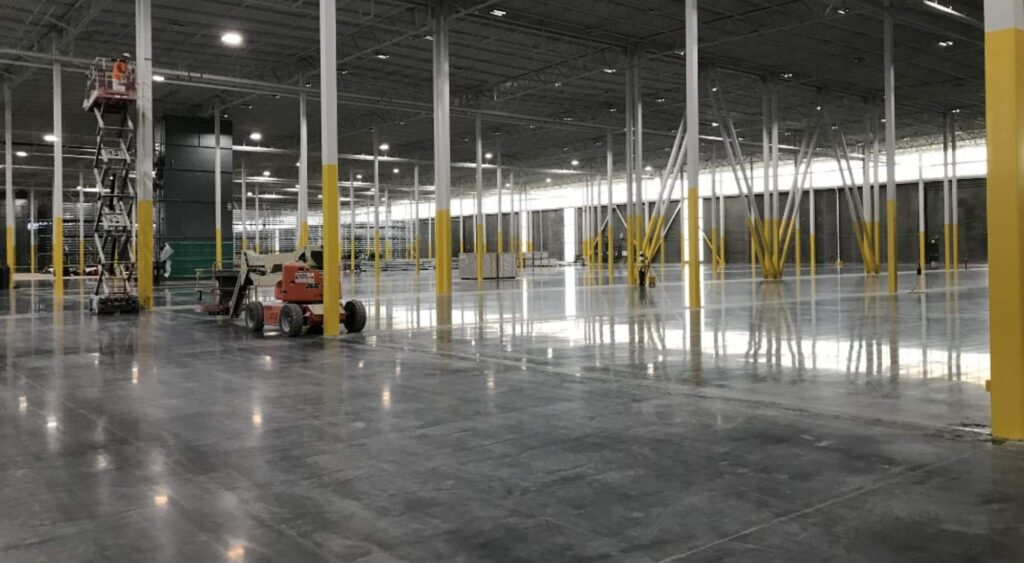
An office or lab environment puts far less stress on a polished floor than a retail space or warehouse.
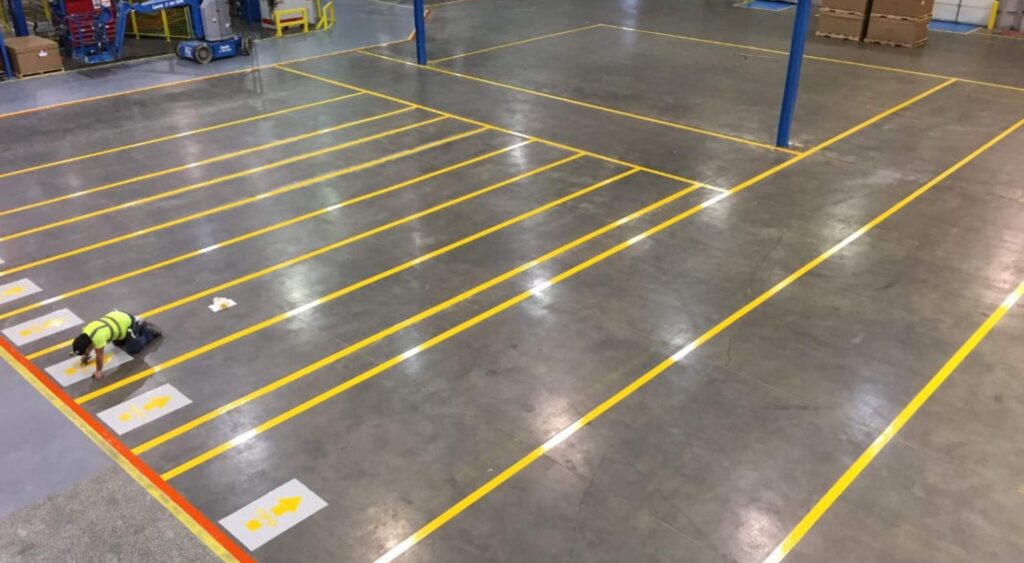
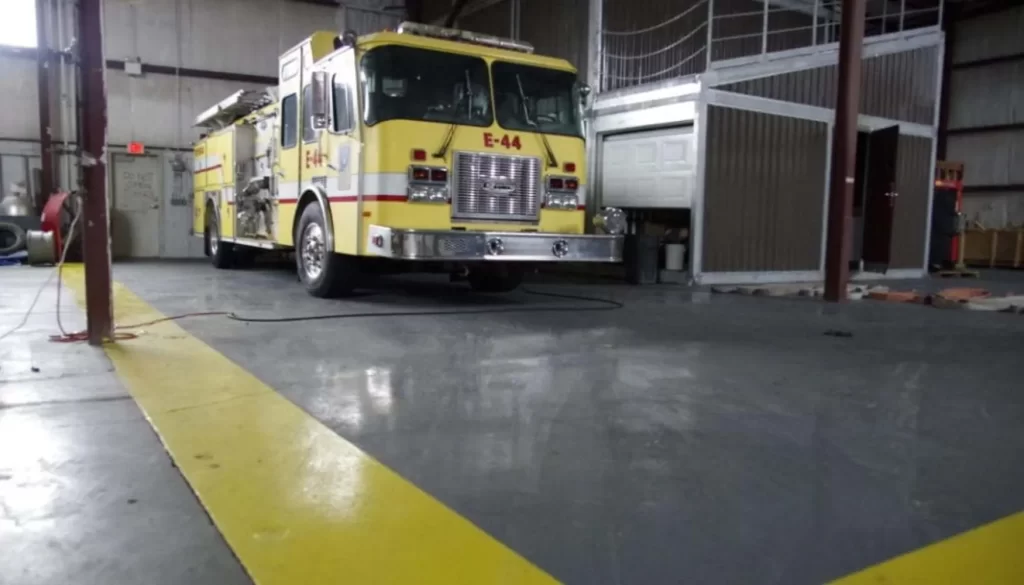
Low-traffic office or lab settings can often maintain their appearance for a decade or more between refreshes. Retail floors, with constant foot traffic and rolling carts, tend to show dulling gloss much sooner. Warehouse and industrial floors face the heaviest wear of all from forklifts, pallet jacks, and heavy equipment moving across the same paths day after day.
#2: Installation Quality
The material rarely fails on its own. Lack of professional installation is usually what shortens a floor’s effective lifespan and often comes in the form of:
- Skipped grinding steps
- The wrong densifier for the slab
- A finish that isn’t appropriate for the facility’s use or traffic.
That’s why Treadwell treats slab assessment as step one on every project.
#3: Environment and Climate Exposure
Moisture and debris tracked in from outside put real pressure on a sealer’s lifespan.
In Kansas City, for example, winter months bring road salt tracked in through entrances, which can accelerate sealer breakdown near doors and loading areas. Humid summer conditions add another layer of stress, since moisture can weaken a sealer’s grip on the surface over time. Facilities in this region typically need more frequent maintenance attention near exterior entry points than a comparable building in a drier climate.
How Often Do You Need To Reseal Polished Concrete?
The standard refresh cycle for commercial polished concrete runs every 3 to 5 years. High-traffic or high-moisture facilities may need attention every 1 to 2 years, while low-traffic spaces can sometimes stretch to 5 to 7 years between refreshes.
A “polish refresh” isn’t a full teardown and redo. It restores shine and clarity to the surface and reapplies the protective guard, providing a barrier against staining from spills, foot traffic, and debris like salts. Between refresh cycles, routine maintenance, like daily dust mopping and periodic pH-neutral wet mopping, keeps the surface performing well and stretches the time between refreshes.
What Causes Polished Concrete To Fail?
The concrete component of polished concrete rarely fails.
What’s described as “failure” is typically one of three things:
- Dulled sheen from a worn sealer
- Moisture intrusion
- A slab that had structural problems before polishing even started
Most floors in this situation get restored rather than rebuilt from scratch. The fastest path to premature failure is skipping professional installation steps, like inadequate slab prep or an incorrect densifier application, since those shortcuts show up years earlier than they should.
Considering Polished Concrete for Your Commercial Floors? Get a Realistic Lifespan Estimate From Treadwell
If you’re in the market for commercial flooring, the team at Treadwell has you covered.
From polished concrete to epoxy and more, we install commercial flooring solutions that not only look great, but will stay that way for years to come.
Contact Treadwell today for a project quote and a realistic answer on what your specific space can expect from a polished concrete floor.
Start A Conversation