
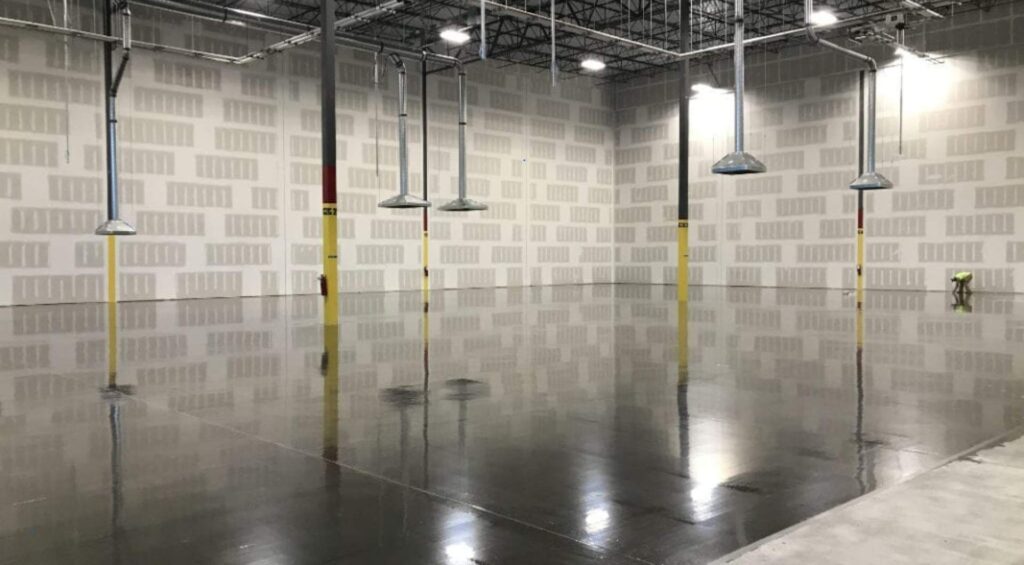
HOW MUCH DOES EPOXY FLOORING COST FOR COMMERCIAL SPACES?
A commercial floor has to do more than look good. It needs to support daily operations, handle the demands of the space, and fit the way your facility is actually used. That is why epoxy flooring is such a strong option for many commercial properties.
Because epoxy systems are highly adaptable, they can be tailored to many facility conditions, performance needs, and design goals. Whether your space needs a clean professional appearance, added durability, easier maintenance, or a finish that can stand up to heavy use, epoxy gives you options without forcing every project into the same solution.
This has likely piqued your interest in epoxy, but now you’re probably wondering how much you’ll need to spend to invest in this type of flooring.
In this guide, we’ll break down typical epoxy flooring costs, the main factors that affect pricing, how epoxy compares to other commercial flooring options, and how to get a more accurate estimate for your facility.
Table of Contents
How Much Does Epoxy Flooring Cost?
Epoxy flooring is a great option for commercial properties. Costs vary depending on the size of the property as well as other factors, including:
- Materials
- Labor
- Pre-installation prep
- Professional installation vs. DIY
- Type of epoxy flooring system
- Regional availability
- Condition of the existing concrete
- Facility requirements
- Project phasing or timeline
Generally, thin mil coatings can cost between $6.50 and $9 per square foot, while thicker industrial coatings typically range from $9 to $15 per square foot for professional installation.
Treadwell can install epoxy flooring for a variety of commercial facilities, ranging from office buildings and retail spaces to warehouses, industrial facilities, medical spaces, food processing facilities, and other commercial environments. If you’re interested in epoxy flooring for your commercial space, contact us today. Our team can review your facility, talk through your goals, and recommend a flooring system that fits the way your commercial space is used.
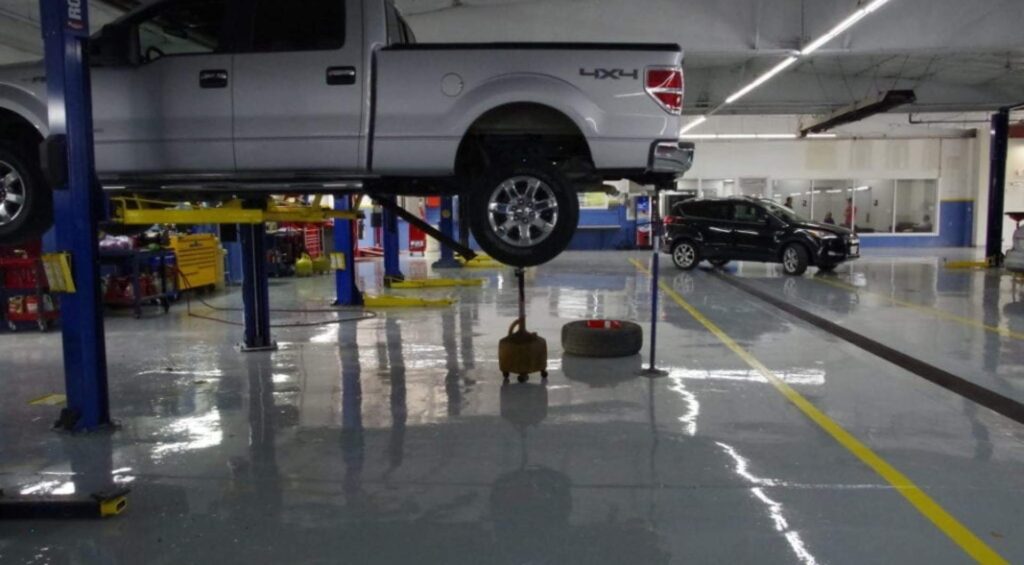
8 Key Factors That Affect Epoxy Flooring Costs
#1: Size of the Project and Square Footage
When it comes to epoxy costs, the size and square footage of the project will dictate the price. The larger the project, the more materials and labor are required, which will increase the price. Many epoxy contractors will also charge a minimum, so even a small space may come with a baseline cost.
#2: Condition of the Existing Floor
If a floor is clear, clean, and ready to be epoxied, the cost will be lower than for one that needs more prep work. If existing flooring needs to be removed, this will increase the labor costs. Additionally, if there is damage from moisture or cracking, this can increase the costs. Surface grinding or patching will require more time and materials for the job.
For commercial projects, floor preparation is one of the most important parts of the installation process. The existing concrete may need grinding, shot blasting, patching, joint repair, moisture testing, or other preparation before the epoxy system can be installed. Skipping this step can lead to poor adhesion, coating failure, or a finished floor that does not perform as expected.
#3: Materials Used
Several different materials are typically used in epoxy projects, which can affect the total price. Common components of epoxy flooring include:
- Vinyl flake epoxy
- Metallic epoxy
- Polished concrete
- Concrete seal
- Polyaspartic flooring
- Urethane cement
- Secondary containment
- Double broadcast quartz
- Seamless epoxy flooring
- Decorative quartz epoxy
- Static control ESD flooring
It is important to note that different types of epoxy do not do well in specific environments. Some factors to consider include:
- Strong levels of UV light
- High temperatures
- Humidity
- Cold climates
- Chemical exposure
- Heavy equipment or forklift traffic
- Cleaning and sanitation requirements
- Static control needs
- And more
Choosing the right epoxy system for your environment is crucial to ensure long-lasting results. If you have questions about which system is best for you and your needs, the professionals at Treadwell can provide our expert advice and walk you through the best options for your space.
#4: Customization Options
Epoxy is a favored type of flooring due to its large number of customization options. As with many projects, the more customization you add, the higher the cost.
Some standard customization options include:
- Color choice
- Decorative flakes and chips
- Metallic finishes
- Quartz and sand additives
- Gloss, satin, or matte finishes
- Logos and custom designs
- Slip-resistant coatings
- Line striping or designated work zones
- Brand-specific color matching
- Texture adjustments based on facility needs
For commercial facilities, customization is not always just about appearance. The finish may also need to support the way the space is used. A production area, showroom, medical environment, food processing facility, or warehouse may each require a different balance of appearance, texture, durability, and cleanability.
#5: Labor Costs
Labor rates vary in different locations across America. Urban areas have higher rates, while rural areas may have lower rates, but less availability. Additionally, the complexity of your project will influence the amount of labor needed. The more mobilizations that occur at the site, the greater the cost for labor workers.
Specialized epoxy installers may charge premium rates, especially if there are conditions such as fast turnarounds or multiple phases. Be sure to find out if the project quote you receive includes labor costs.
Trowel-applied coatings require more skilled labor to install and are a slower process, so installation of these finishes is likely to have a higher price tag.
Labor costs may also increase when crews need to :
- Coordinate with other contractors.
- Work around active operations.
- Complete the project in phases.
- Meet a tight construction schedule.
Treadwell is experienced in working with general contractors and commercial project teams, which can be especially helpful when flooring is one part of a larger buildout or renovation.
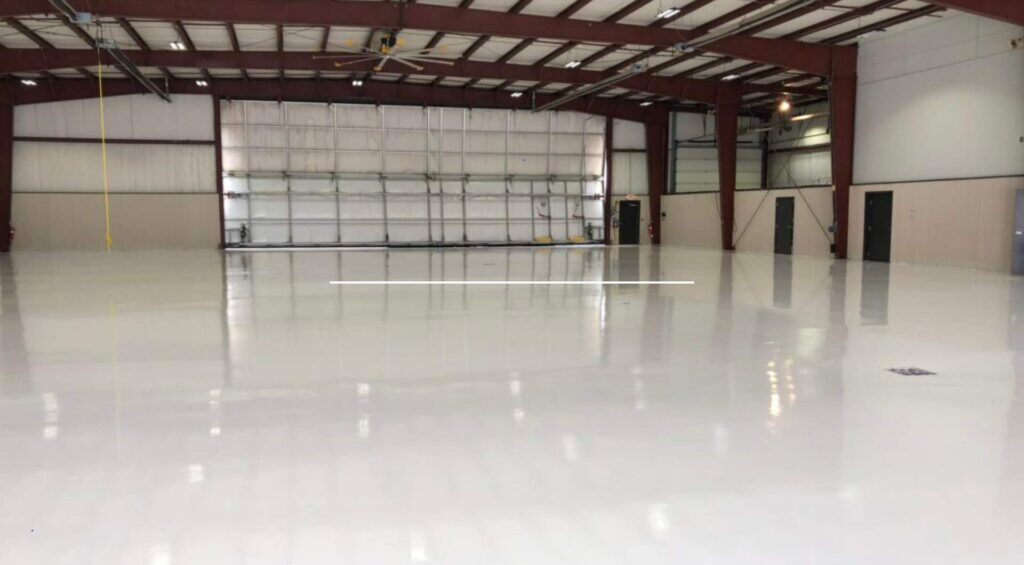
#6: Sealants and Finishing Coats Used
Sealants and finishes can be applied before or after the epoxy layer to prepare the surface or add specific performance qualities. Some sealants and finishes used include:
- Polyurethane top coats
- Provides UV stability
- Provides good chemical and abrasion resistance
- Acrylic Urethane top coats
- Provides fast drying options
- Includes low VOCs
- Clear epoxy top coats
- Provides additional thickness
The team at Treadwell can also add certain additives to achieve specific properties, such as aluminum oxide for enhanced slip resistance.
#7: Regional Pricing Differences
The availability of skilled labor and materials can cause prices to vary depending on the region where your project is located. For example, if you operate in a dense commercial area, delivering supplies and clearing the space may be more difficult than in a commercial property with more room around it. While these factors may not seem significant, they are all considered when pricing out epoxy installations.
Climate and regional regulations may also impact costs. For example, colder regions may require specific curing agents and processes, which can drive up pricing. When you’re considering epoxy flooring for your commercial space, it is essential that you connect with a local contractor who understands the requirements in your area.
#8: Complexity of the Space
Larger, open areas may allow crews to work more efficiently, while smaller or more divided spaces may require additional detail work, setup, and coordination. Hallways, tight rooms, equipment-heavy areas, and spaces with multiple transitions can take more time than a wide-open floor.
How Much More Does Epoxy Flooring Cost Compared To Other Options?
Epoxy flooring is usually not the lowest-cost commercial flooring option upfront, but it often provides strong long-term benefits for facilities that need durability, easy maintenance, and a surface that can handle daily wear. Compared to other flooring materials, epoxy typically falls in the middle to higher range depending on the system, thickness, surface preparation, and finish.
Here are some general commercial flooring cost comparisons:
- VCT (vinyl composite tile) flooring usually costs around $1.79 to $4.62 per square foot installed. It can be one of the lower-cost options upfront, but it may require more maintenance, waxing, stripping, or replacement over time.
- Polished concrete can cost from $3 to $30 per square foot, depending on the condition of the slab and the level of polish desired. This can be a cost-effective option for some commercial spaces, but it is a different flooring solution than epoxy.
- LVT (luxury vinyl tile) flooring usually costs around $2 to $6 per square foot installed. It is commonly used in offices, retail spaces, and healthcare settings, but it may not offer the same seamless surface or heavy-duty performance as epoxy in more demanding environments.
- Rubber flooring materials usually cost around $2 to $4.50 per square foot installed. It is often used in gyms, fitness areas, and specialty commercial spaces, but it may not be the right fit for every facility.
- Porcelain tile may cost from $1 and up per square foot for the materials only. It can be durable and attractive, but installation is more labor-intensive, and grout lines may require additional maintenance.
While options like VCT or polished concrete may cost less at the outset, epoxy can be a better fit for commercial facilities that need a seamless, durable, and easy-to-maintain surface. Warehouses, medical spaces, food processing facilities, industrial buildings, and other high-use environments may need more performance from their flooring than a basic low-cost material can provide.
The better question is not always whether epoxy is the cheapest option. For commercial spaces, it is important to consider whether the floor can handle the demands of the facility. A lower-cost floor that wears out quickly, requires frequent repairs, or creates maintenance challenges may become more expensive over time.
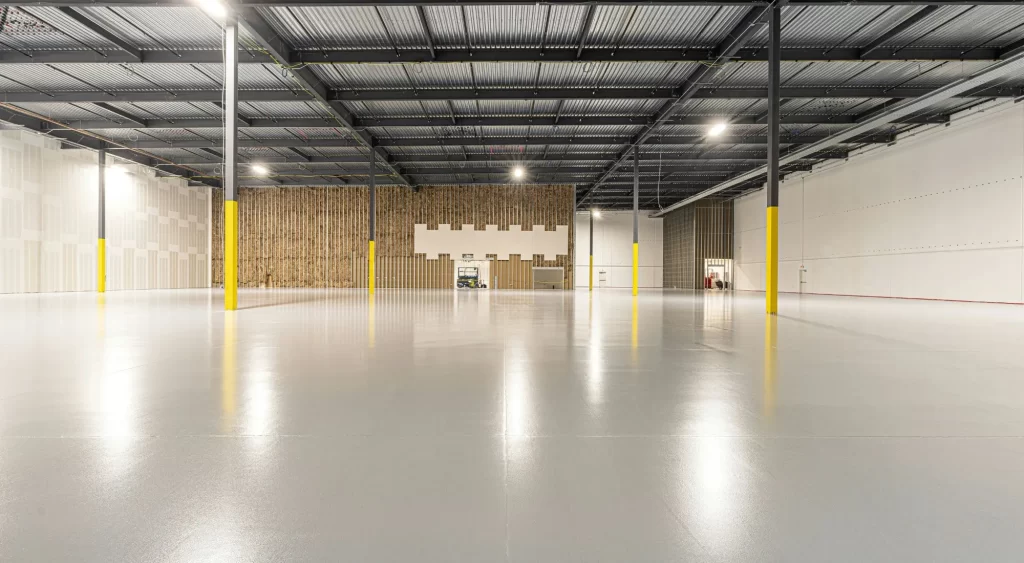
Transform Your Space With Treadwell’s Expert Commercial Epoxy Flooring Services
At Treadwell, we help Kansas City businesses make sense of their epoxy flooring options before the project begins. Our team of professionals can seamlessly install or repair epoxy flooring to meet your business’s specific needs.
We specialize in commercial floor coatings, polished concrete, concrete flooring, gypsum underlayments, and leveling solutions for businesses and project teams. Our work is built around clear communication, practical problem-solving, and coordination with other contractors when needed.
Our epoxy services include:
- Decorative quartz epoxy
- Seamless epoxy flooring
- Static control ESD flooring
- Commercial floor coating systems
- Specialty epoxy solutions based on facility needs
Contact us today to receive a clear answer to “how much does epoxy flooring cost?” and discover how we can enhance your flooring with our professional and efficient epoxy services. You can call our team or fill out our online contact form to connect with a flooring representative and request a custom quote.
