
POLISHED CONCRETE VS EPOXY: WHICH FLOORING IS BEST FOR YOUR COMMERCIAL SPACE
Ever find yourself walking into your business, admiring your carefully arranged space, but then suddenly noticing the floors that desperately need renovation?
As a business owner, you know that making the right flooring choice is important. You want your commercial space to look elegant and well-preserved, and you also want it to be welcoming and comfortable for your customers.
When it comes to polished concrete vs epoxy, choosing the right flooring for your commercial space can feel overwhelming. Both options offer durability, visual appeal, and low maintenance, but each comes with different advantages depending on your space, budget, and long-term needs.
Keep reading to learn more about these two popular flooring systems, the factors you should consider before making a decision, and how to determine the best fit for your commercial space.
Table of Contents
- What Is Polished Concrete Flooring?
- What Is Epoxy Flooring?
- Polished Concrete vs Epoxy: Key Differences
- 4 Factors To Consider When Choosing Between Polished Concrete and Epoxy
- Polished Concrete vs Epoxy: Which Flooring Option Is Better?
- Frequently Asked Questions About Polished Concrete vs Epoxy
- Let the Experienced Team at Treadwell Help You Choose the Right Commercial Flooring
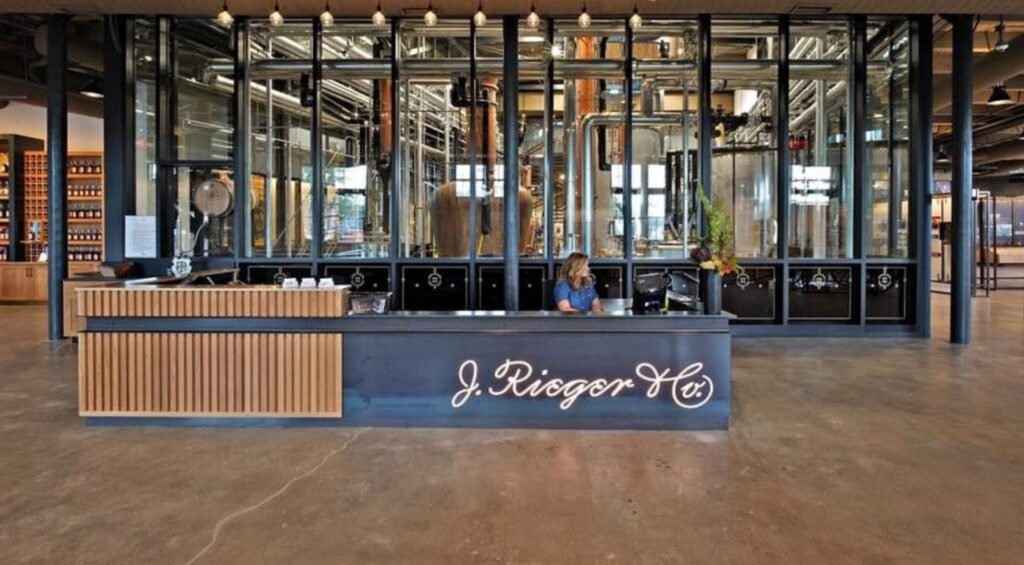
What Is Polished Concrete Flooring?
Polished concrete flooring is created by mechanically grinding, honing, and polishing an existing concrete slab until it becomes smooth, dense, and has a refined, reflective finish. This process works with the concrete that’s already in place rather than adding a separate surface layer on top.
It’s a popular choice for commercial and industrial spaces where durability, clean aesthetics, and easy day-to-day upkeep are important.
Advantages of Polished Concrete
Polished concrete flooring comes with several practical benefits that make it a strong option for commercial spaces:
- High durability for demanding environments: This flooring stands up to heavy foot traffic and daily use in busy commercial spaces, so you can count on it to last.
- Low maintenance requirements: You don’t need to wax or coat it. Just sweep regularly and mop once in a while to keep it looking nice.
- Cost-efficient over time: Because it uses the concrete slab you already have, installation is simpler, and long-term maintenance costs are lower.
- Environmentally conscious option: Since it improves the surface you already have instead of adding new materials, this flooring is a more sustainable choice.
Disadvantages of Polished Concrete
While polished concrete is practical and durable, there are a few limitations to keep in mind:
- Can feel cold underfoot: This type of flooring often feels cooler than others, especially in rooms that are already cold, because it does not hold heat well.
- More prone to visible staining: If oil or something acidic spills and is not cleaned up right away, it can leave a stain.
- Limited control over final appearance: The final color and finish may look different depending on the condition of the concrete slab underneath.
- Repairs can be challenging to match: If the floor gets damaged, it can be hard to make repairs that match the rest of the surface.
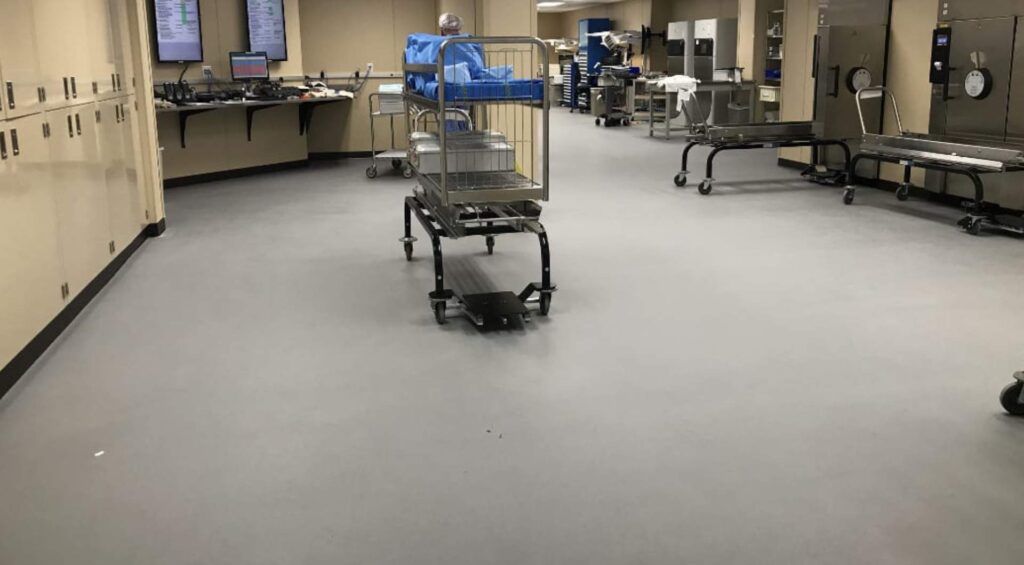
What Is Epoxy Flooring?
Epoxy flooring is a surface system made by combining epoxy resin and a hardener, which chemically bond to form a strong, seamless coating. This coating is applied over properly prepared concrete or other suitable surfaces, creating a durable protective layer.
It’s commonly used in commercial and industrial environments where resistance to wear, chemicals, and heavy use is a priority.
Advantages of Epoxy Flooring
Epoxy flooring offers a range of benefits that make it especially popular in commercial settings:
- Strong resistance to chemicals and spills: The seamless surface protects against oils, cleaning products, and industrial chemicals.
- Seamless and easy-to-clean finish: With no joints or gaps, dirt does not collect, and cleaning is simple.
- Highly customizable appearance: Available in a wide range of colors, textures, and finishes, including branded designs.
- Performs well under heavy use: Handles machinery, vehicles, and constant activity in demanding environments.
Disadvantages of Epoxy Flooring
Epoxy flooring is very durable, but it does come with a few drawbacks:
- More intensive installation process: You need to prepare the surface carefully, which can make installation take longer and feel more complicated.
- Higher upfront cost in many cases: The materials and labor typically cost more than simpler flooring systems.
- Repairs may be visible: If the floor gets damaged, repairs might stand out and not match the original look exactly.
- Can become slippery without additives: If the floor gets wet, you often need to add something to make it less slippery and safer.
Trust the Treadwell team to guide you through the pros and cons of polished concrete vs epoxy. We’ll help you choose the flooring that’s perfect for your commercial space: durable, stylish, and built to last.
Polished Concrete vs Epoxy: Key Differences
Polished concrete and epoxy flooring are both durable choices often found in commercial spaces, but they work best in different situations.
| Feature | Polished Concrete | Epoxy Flooring |
| Durability | Very durable under heavy foot traffic | Strong resistance to wear, impact, and mechanical loads. |
| Maintenance | Low maintenance, simple cleaning | Easy to clean, minimal upkeep |
| Appearance | Natural, industrial, reflective finish | Customizable colors, patterns, and finishes |
| Chemical Resistance | Moderate resistance | High resistance to chemicals and spills |
| Moisture Resistance | Can stain if not sealed properly | Strong resistance due to seamless coating |
| Installation | Uses existing concrete slab, mechanical process | Requires coating system and surface prep |
| Cost | Generally more cost-efficient long-term | Higher upfront cost in many cases |
| Repairs | Difficult to blend seamlessly | Repairs possible, but may be visible |
The following comparison highlights the main differences to help you decide which option suits your space best.
4 Factors To Consider When Choosing Between Polished Concrete and Epoxy
#1: What the Space Is Used for
One of the most important factors to consider when deciding on polished concrete vs epoxy is how the space will actually be used day to day.
For spaces that require strong slip resistance, chemical resistance, or exposure to moisture and temperature changes, epoxy flooring is usually the better fit.
Polished concrete works well in high-traffic commercial environments such as retail stores, showrooms, and open commercial areas because it offers strong abrasion resistance and long-lasting durability.
However, polished concrete may not be ideal in environments with heavy vehicle traffic, constant moisture, or frequent chemical exposure, such as manufacturing plants or veterinary clinics.
#2: Condition of the Existing Floor
The condition of the existing slab is another key factor when choosing between the two systems.
If the concrete is heavily cracked, uneven, or has surface damage, polished concrete may not achieve a consistent or high-quality finish.
Exposure to harsh chemicals, oils, or previous coatings can also affect how well the surface can be polished.
In contrast, epoxy is generally more forgiving, as it is designed to bond properly over properly prepared surfaces, even when the existing slab is not in perfect condition.
#3: Budget
Budget is one of the main factors to think about when choosing the right flooring for a space.
Polished concrete usually costs less at first because it uses the existing slab and needs fewer extra materials.
Epoxy flooring often costs more to install because it needs extra preparation and materials. Still, it can be a better long-term choice in places where you need more durability.
It’s also a good idea to think about repair costs. If there are stains or old damage, polished concrete can be harder to fix, while epoxy floors are often easier to recoat.
#4: Aesthetics
When deciding between polished concrete and epoxy, it’s important to consider both aesthetics and design flexibility.
Epoxy flooring can be customized with different colors, patterns, textures, and even branded designs. This makes it a great choice for areas where appearance is important.
Polished concrete gives a natural, industrial look with a clean, reflective finish. It fits well in modern commercial spaces.
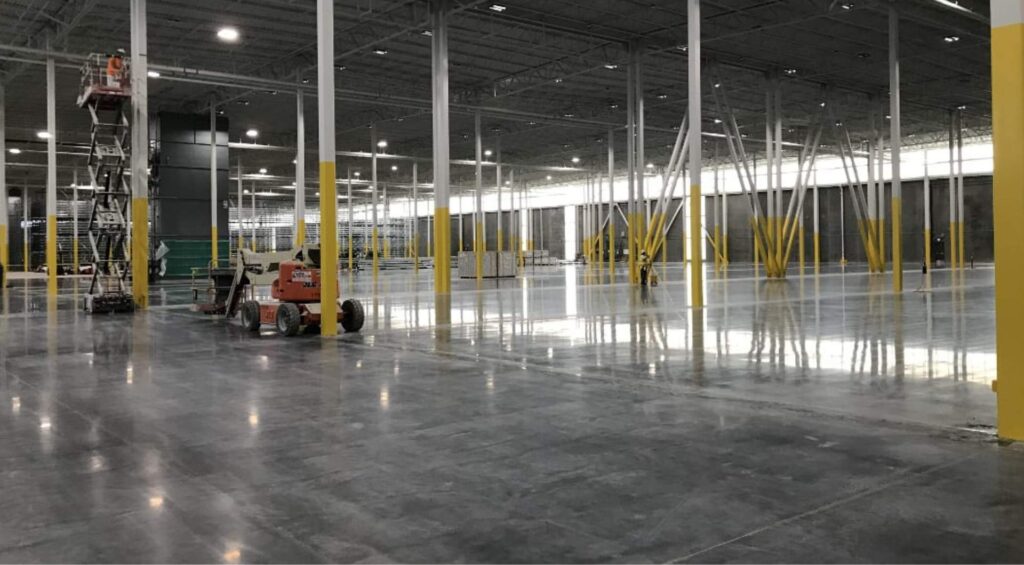
Polished Concrete vs Epoxy: Which Flooring Option Is Better?
Choosing between polished concrete and epoxy depends on what your commercial space needs most.
Both are strong, durable, and popular in commercial settings, but they work differently based on how you use the space and what you want from your floors over time.
Polished concrete is an affordable flooring choice that holds up well under heavy foot traffic and stays looking clean and modern with little upkeep. It works especially well in stores, offices, and open commercial areas where durability and simplicity matter most.
Epoxy flooring is a better choice for spaces that need extra protection from chemicals, water, or heavy equipment. It can also be customized with different colors, logos, or unique patterns.
Polished concrete is a good option when you want something durable, simple, and with a natural industrial style. Epoxy is better when you need the floor to handle tougher conditions and higher performance demands.
Both types of flooring are reliable. The main thing is to pick the one that fits how your space is used every day.
Frequently Asked Questions About Polished Concrete vs Epoxy
Polished concrete gives the original slab a smooth, natural shine by grinding and polishing it. In comparison, epoxy flooring adds a strong, protective layer and lets you choose from many different designs.
Epoxy flooring usually costs more at first because of the extra work and materials needed. Polished concrete tends to be cheaper upfront since it uses the concrete you already have. Still, the best choice depends on how you plan to use the space over time.
You can install epoxy on most concrete floors, but it is important to prepare the surface first. Make sure to fix any cracks, deal with moisture problems, and clean up any contamination before you start. This will help the epoxy stick properly.
The best flooring for your space depends on its needs. Polished concrete is low-maintenance, long-lasting, and affordable. Epoxy flooring works well in places that need to resist chemicals, offer more design choices, or require extra strength.
Let the Experienced Team at Treadwell Help You Choose the Right Commercial Flooring
At Treadwell, we’re proud of our Kansas City roots. Our name reflects the way we approach every project: with integrity, accountability, and a commitment to helping clients move forward with confidence when choosing the right flooring for their commercial space.
We are a full-service flooring company serving Kansas City and the Midwest. We specialize in the following flooring services:
- Concrete coatings
- Polished concrete
- Slip-resistant flooring
- Gypsum underlayments
- Concrete overlays
- Specialty flooring services
Whether it’s a commercial or industrial project, our focus is on delivering floors that perform and last.
If you’re deciding between polished concrete and epoxy, we can help you evaluate your space and find the right solution based on your needs, budget, and long-term goals.
We love talking about floors, so feel free to reach out with any questions or ideas for your project.
