
WHAT IS GYPSUM UNDERLAYMENT? 5 COMMON APPLICATIONS AND FAQS
For anyone who works in multi-family construction, time is of the essence. Pouring, screeding, and leveling the material can be a daunting job, particularly because you have to work fast, and there’s little room for error.
Gypsum cement makes the whole process run more smoothly. It is the key component in cement that allows it to be poured and manipulated before it hardens. Thanks to engineers working to formulate construction materials that are easier to use but still high-quality, we have a product optimally suited for underlaying floors in commercial and multi-family settings.
Learn several reasons gypsum underlayment is used (as opposed to other materials) and get answers to common questions regarding its application.
Table of Contents
What Is Gypsum Underlayment?
Gypsum underlayment is a construction material made from a slurry of gypsum, additives, and a certain grade of washed sand. It is used primarily in timber-frame constructions. Names sometimes used interchangeably for gypsum underlayment include “gypsum concrete” and the brand names:
- Gyp-Crete®
- Firm-Fill®
- Levelrock®
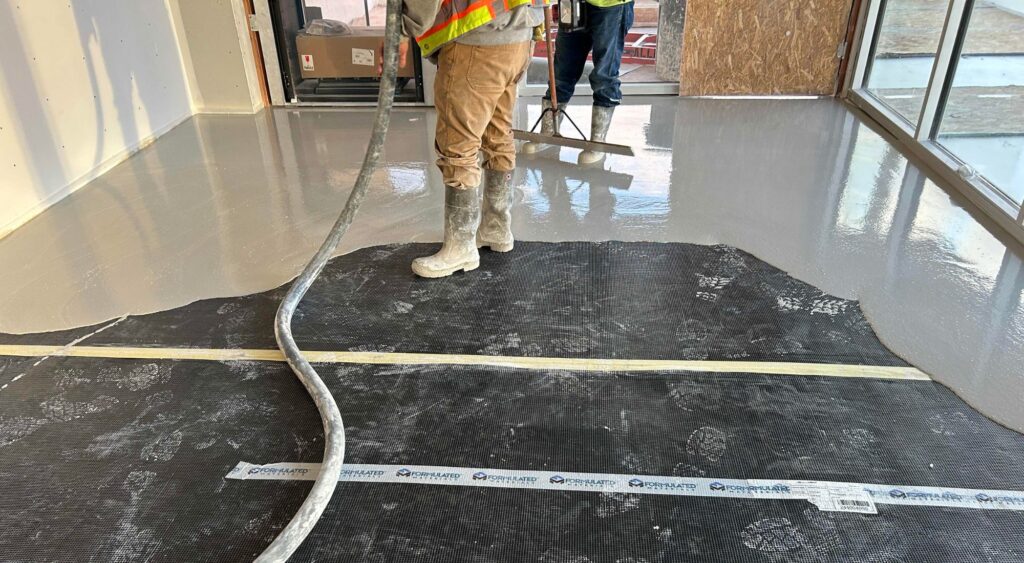
A specialized truck mixes the ingredients at the construction site. Although screeding may be necessary — particularly if the underlayment is poured on a non-level concrete floor — little leveling of the material is needed because it so effectively fills in the empty spaces it is poured over.
If you need gypsum underlayment for your commercial property, contact Treadwell for our skilled, professional service.

How Is Gypsum Underlayment Applied?
Depending on the construction type and building codes, there are different application options. A lower-budget option that is also satisfactory for soft-surface floors, such as carpet, is that the subfloor may be primed and the underlayment laid directly on top.
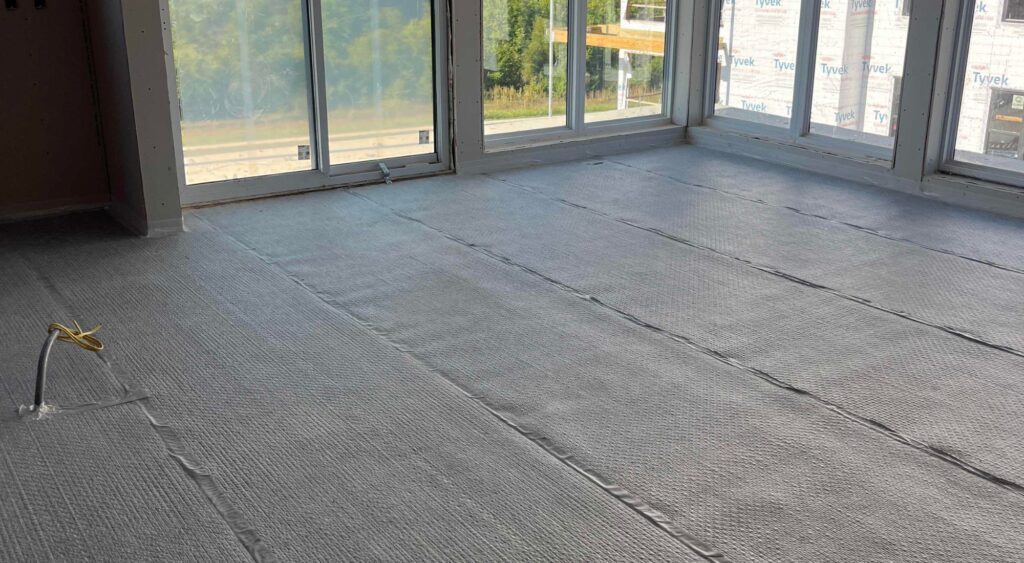
For hard floors such as LVT or ceramic tile, a soundmat covering the entire surface of the subfloor is paired with isolation strips along the wall, ensuring that sound is dissipated throughout the mat; then the gypsum underlayment is poured on top, providing further assurance of sound-proofing.
What Is Gypsum Underlayment Used for?
Gypsum underlayment may be used as part of the floor assembly in various types of wood-framed buildings, including:
- Multifamily constructions such as hotels, condos, and apartment buildings
- Old buildings being renovated
- Senior living
- Commercial/office buildings
- College dorms
Gypsum underlayment helps satisfy building code requirements for fire-resistance and sound-proofing, but that is not the only reason it is a popular choice. It is also cost-effective, relatively easy to install, and quick to harden.
The Top 5 Applications for Gypsum Underlayment in Commercial Construction
#1: Fire Rating
Although the exact fire rating depends on the design and thickness of the specific product being applied, gypsum underlayment qualifies as capable of delaying the spread of a fire through the floor or ceiling for one hour. This passive fire protection gives occupants of the building more time to escape in the event of a fire.
#2: Surface Leveling
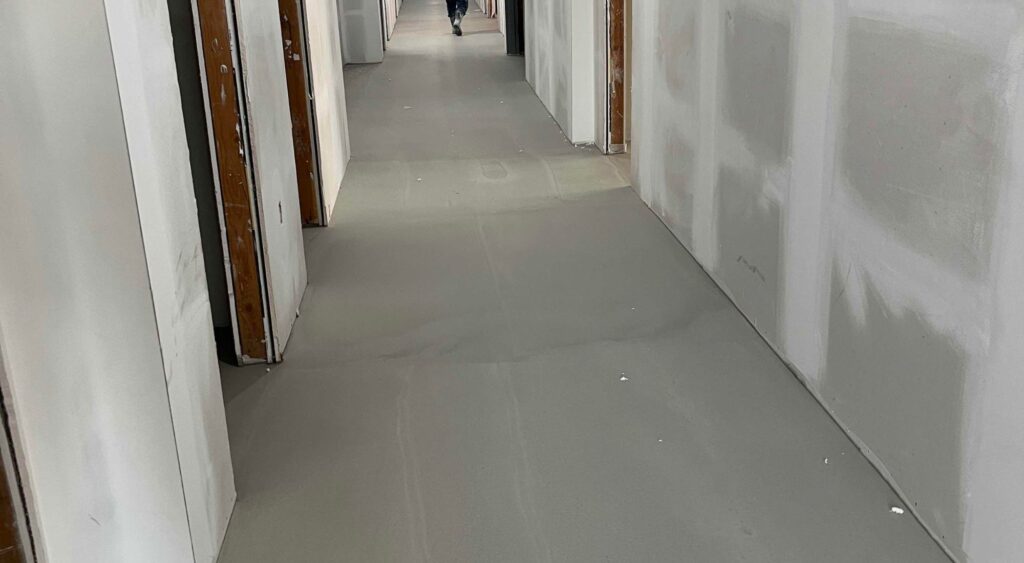
Because of its ability to self-level, gypsum underlayment is aptly suited for leveling uneven surfaces, such as concrete that has settled over time. Once the subfloor has been prepared, the high and low spots are determined, and the self-leveling compound is applied until it meets the highest point’s height, as signified by a straight edge.
After it has cured, new flooring can be installed on top. Level floors are important for aesthetics, safety, and proper installation and maintenance of flooring.
#3: Noise Reduction
While building codes contain a minimum amount of soundproofing, acoustics and comfort are important considerations. This is especially true for buildings designated for certain purposes, such as government buildings, churches, or hospitals.
Gypsum underlayment atop a sound mat absorbs much of the sound that would otherwise be transmitted through the floor.
#4: Radiant Heating
For one type of radiant heating, a network of pipes is installed below what will be the new floor. Gypsum underlayment can be poured over and around the pipes serving a dual purpose: to protect and support the pipes and to conduct heat from the pipes to the entire floor.
#5: Asbestos Encapsulation
Although asbestos has been banned from construction materials since 1989, many older constructions still contain this natural but damaging material. A person may inhale asbestos fibers without being aware of it. Hazards of long-term asbestos exposure include:
- Cancer: Areas of the body most often affected include the lungs, larynx, ovary, and mesothelium.
- Asbestosis: Scarring of the lungs caused by inhaling asbestos fibers that problematizes oxygen and carbon dioxide exchange.
- Pleural disease: Disruption of the membrane around the lungs and heart.
If it is suspected that a building’s flooring contains asbestos, a gypsum underlayment can effectively contain asbestos fibers, sealing them away so they cannot be inhaled and cause adverse health effects.
Frequently Asked Questions About Gypsum Underlayment
How Long Does It Take To Apply Gypsum Underlayment
Several factors play into how quickly a gypsum underlayment may be applied:
- The design of the building: A more complex design requires more nuanced preparation.
- The general contractor’s scheduling needs: If the underlayment team has to work near other teams of construction workers or if the team is only given a certain amount of space each week, it will take longer.
- The thickness of the underlayment: The more material is needed, the longer it will take to pour.
On average, an efficiently working team can install about 30,000 square feet of gypsum underlayment in a week.
Although foot traffic often resumes in the area by the next business day, the manufacturers usually recommend 72 hours for complete curing of the underlayment.
What Types of Flooring Can Be Installed Over Gypsum Underlayment?
Gypsum underlayment is very versatile in terms of which floors it can support. Whether you want a softer floor like carpet, vinyl, or laminate or a harder floor such as tile or engineered wood, gypsum underlayment is perfectly acceptable. However, harder floors may require additional preparation, such as an isolation membrane, primer/sealer, or adhesive.
Is Gypsum Underlayment the Same as Concrete?
The primary difference between gypsum underlayment and concrete is that the former contains gypsum powder, which gives it its unique capabilities, including:
- Less dense, lighter material
- Ease of installation
- Self-leveling
- Faster setting time
- Superior soundproofing and fire resistance
Although concrete is less prone to cracking, these features may make gypsum underlayment preferable, depending on the floor’s purpose and the amount of traffic it sustains.
Treadwell: Kansas City’s Trusted Gypsum Underlayment Contractor
From building codes to proper ingredient ratios to perfect angles, we at Treadwell have the knowledge and expertise it takes to install gypsum underlayment in your area of business.
We provide specialized guidance about flooring for any industry, whether it’s healthcare or restaurant, education or automotive, or something else.
Besides gypsum underlayment, we provide the following service to our Kansas City area clients:
- Epoxy flooring
- Polished concrete
- Concrete overlay
- Specialty services, such as moisture mitigation and deep cleaning
Contact Treadwell today to learn more about the process of gypsum underlayment and to get your project started.
