
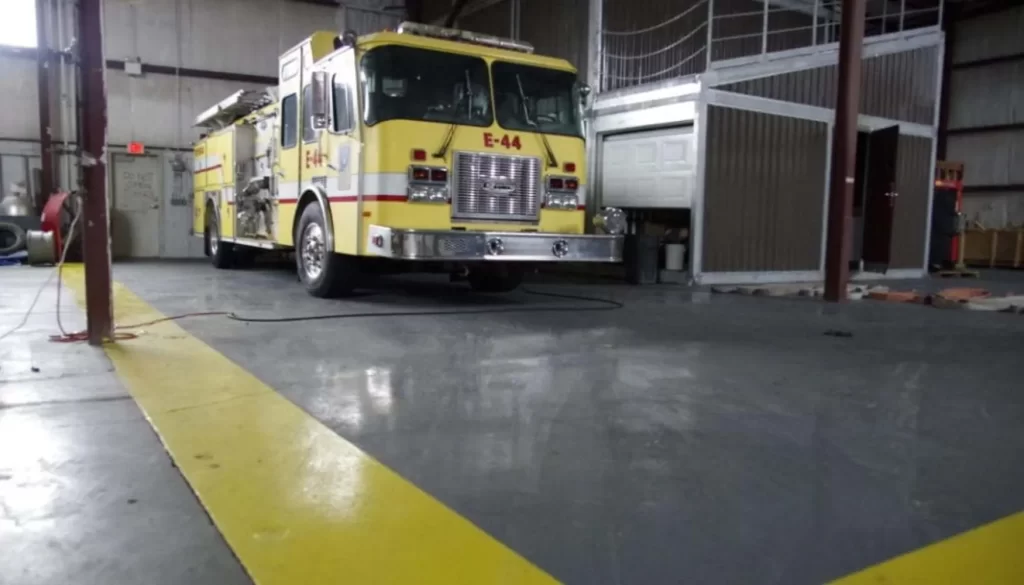
BREAK THE BOND: HOW TO REMOVE EPOXY FLOOR COATING
Are you tired of looking at an old, outdated, or damaged floor in your commercial space?
Are you wondering how to remove it? If so, you aren’t alone.
Many business owners and manufacturers eventually need epoxy floor coating removed to repair concrete, install a new floor, or prepare the surface for a different coating.
While epoxy removal can be time-consuming and challenging, it can be done with the right techniques and preparation.
Below, we will discuss how to remove epoxy step by step, factors to consider before choosing a method, and some of the most frequently asked questions about epoxy removal so that you can make informed decisions about your flooring needs.
Table of Contents
What Makes Epoxy So Hard To Remove?
Epoxy is incredibly durable and meant to last, so when the time comes to remove epoxy, it can be quite challenging. The curing process and the chemical structure of the epoxy make it strong and resistant to many common chemicals.
The biggest factors making epoxy removal difficult include:
- A cross-linked structure that can’t be easily undone
- Standard solvents like water, alcohol, and mild thinners make no impact
- It locks into the pores of the base material
- Requires very high temperatures to soften due to its heat resistance
Rather than attempting to remove the epoxy yourself, it is best to rely on professionals to get the job done. Our team at Treadwell has the knowledge and experience to safely and effectively remove the epoxy floor coating from your commercial space.

Epoxy Floor Coating: Removal vs. Overlay
Epoxy removal is usually a long and tedious process, but in some situations, removing the existing epoxy coating may not be necessary. Instead, an overlay can be placed over the existing flooring.
Rather than full removal, an overlay can be done when there is:
- No lifting, bubbling, or tearing because the old coating is completely bonded
- Minor, cosmetic damage such as scratches or dullness
- No evidence of moisture penetrating the concrete below
Some conditions indicating failure of the existing epoxy require complete removal, such as:
- Peeling, chipping, or separation from the concrete below
- Chemical or oil penetration that has ruined the bond
- Moisture damage that would require a new sealed layer
Tests can be done to determine if removal is necessary before the project begins.
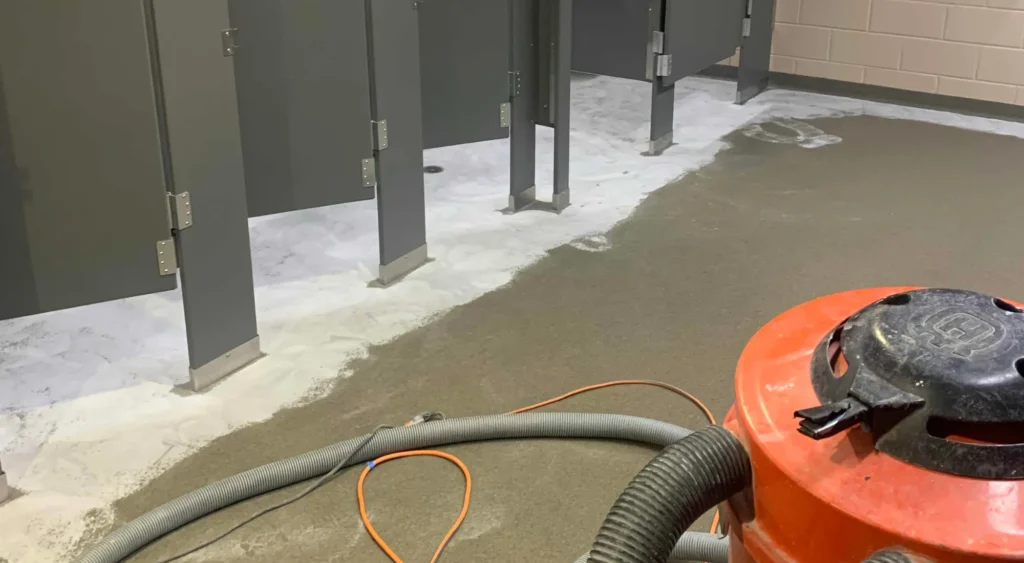
Signs Full Removal is Necessary
Placing an overlay over an epoxy floor coating that is already failing will not correct the issues you are facing and may only provide a temporary fix.
Signs that indicate the need for complete removal are:
- Poor adhesion: An overlay would cause more weight and stress on the existing epoxy, which would pull it right off the floor.
- Extensive coating failures: Cracking and bubbling in the existing layer indicate trapped air and movement, causing the overlay’s finish to be ruined.
- Surface contamination: An overlay would hide contamination from oil, dust, or moisture, keeping new material from adhering to the concrete below.
- Structural repairs are needed: Unrepaired cracks will show through, and damage will allow moisture to enter, causing bubbles and blisters in the overlay layer.
- Durability concerns: If there is any chance of trapped moisture or damage, an overlay will not hold up to heavy traffic and may crack or break apart.
Situations Where Removal May Not Be Needed
While an overlay is not a solution for failing floors, an overlay may be appropriate in some situations, such as:
- Well-bonded coatings: When the coating is well-bonded, it provides a stable moisture barrier, preventing the new overlay from being ruined.
- Minimal surface damage: The old epoxy is still firmly adhered, and the strength of the floor is not compromised.
- Minor scratches or cosmetic damage: A new coat will fill minor scratches in without affecting its durability.
- Localized repairs: Small areas can be patched and keep the floor sound and intact before an overlay.
How To Remove Epoxy Floor Coating in 5 Steps
If your floor situation requires the complete removal of the epoxy coating, many tools can be used to assist with the process:
- Floor grinder: When the correct attachments are used, it essentially shreds the coating by shaving it away layer by layer.
- Diamond grinding discs: Used to aggressively chip or grind the epoxy, depending on the thickness and the type of disc used.
- Shot blaster: It is used for large commercial floors to strip and profile the concrete surface.
- Scrapers: Use force to wedge the material off the concrete.
- Heat gun: Utilized for small areas to soften the resin and break the bond to scrape the epoxy.
- Chemical stripper: Break the chemical bonds of the epoxy and soften it for scraping.
- Vacuum with HEPA filtration: Connects to a grinder to capture the microscopic particles of epoxy that are being removed.
When attempting to remove epoxy, you need protective equipment to ensure your health and safety, such as:
- Respirators
- Safety glasses
- Gloves
- Hearing protection
Epoxy removal can be difficult and dangerous if it’s not approached properly. Letting professionals such as the team at Treadwell handle the removal. Our team can assess your floor and determine the appropriate approach to use.
Step 1: Inspect the Existing Floor
A thorough inspection is needed to determine the current condition of the underlying concrete and to identify the appropriate removal method.
During the inspection, look for:
- Stains that may indicate chemical spills and contaminated concrete
- Test for moisture content
- Structural cracks that will need to be repaired
- Crumbling or softness of the concrete
- Gauge the thickness of the coating
- Check adhesion by looking for bubbling, peeling, or lifting
- Check for hazardous materials such as lead-based paint
Step 2: Prepare the Space
Once the inspection is complete, prepare your space for the removal by:
- Removing furniture and equipment
- Ensure proper ventilation
- Wrap large items that cannot be moved in heavy-duty plastic
- Sweep and vacuum the floor
- Scrub the floor
- Seal HVAC systems
- Create a containment barrier
Step 3: Choose Removal Method
Based on the inspection, choose the appropriate removal method for your space:
- Chemical stripping is best for:
-
-
- Small spaces
- Spot removal
- Hard to reach corners and edges
- Very thin coatings
-
- Mechanical grinding is ideal for:
-
-
- Surface profiling before new coatings
- Thin coatings
- Strongly bonded coatings
- Small commercial spaces
- To level and restore the smoothness of the concrete
-
- Shot blasting is best for:
-
-
- Installing thick epoxy or overlays
- Large, open commercial and industrial spaces
- Minimizing airborne dust
- Uncovering hidden concrete defects
-
- Heat-assisted removal is ideal for:
-
- Small repairs and patching
- Accidental, hardened epoxy spills or drips
- Clearing tight corners or crevices where grinders can’t reach
- Small, decorative surfaces
It is important to choose the appropriate removal method to avoid damaging the concrete.
Step 4: Remove the Epoxy
To effectively remove the epoxy after selecting the best method:
- Work in small sections
- Maintain even grinding
- Avoid damaging the concrete
Step 5: Clean the Surface
When the removal is complete, clean the surface of the concrete by:
- Removing debris
- Vacuuming
- Washing the floor
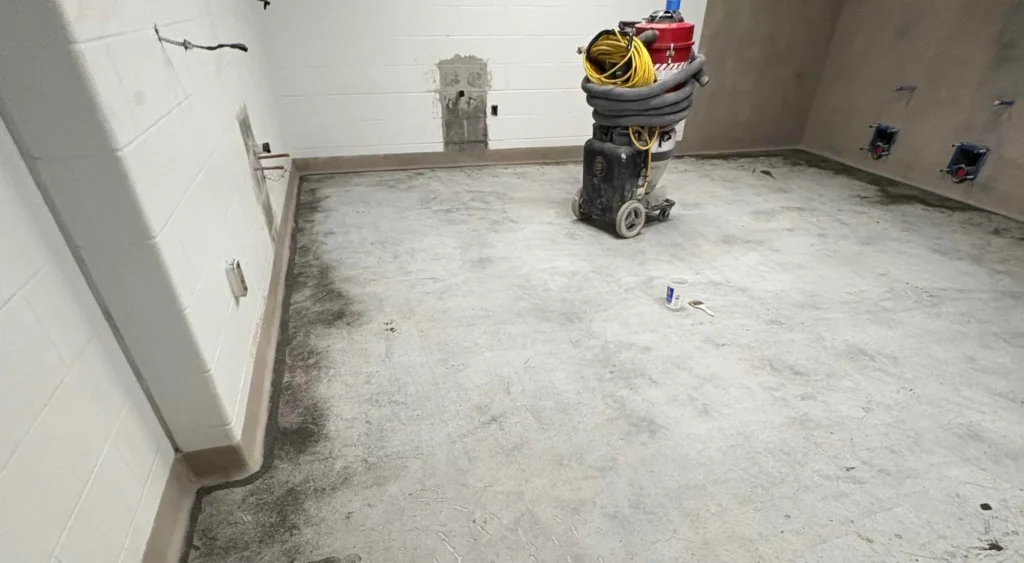
Epoxy Floor Coating Removal: FAQs
How Much Does It Cost To Remove Epoxy Floor Coating?
Epoxy removal is quite labor-intensive. The cost for removal depends on many factors, such as the:
- Thickness
- Type of epoxy
- Condition of the floor
- Strength of the bond
- Size and layout of the space
- Needed repairs
- Cost of disposal
Our team at Treadwell can assess your floor and create a customized quote based on the unique needs of your space.
How Do You Maintain Commercial Epoxy Flooring?
Once your epoxy floor coating is complete, it is important to maintain it. Performing routine maintenance will keep your flooring in good condition.
Be sure to:
- Clean up spills within 24 hours to avoid staining
- Remove stains and rust
- Hose down and clean only using appropriate chemicals
- Spot mop as needed
- Broom sweep daily
- Use auto scrubbers on the floors every day or every other day
How Long Does Epoxy Removal Take?
Many factors determine the amount of time needed to remove epoxy, including:
- Method used
- Thickness of coating
- Size of the space
- Age of the coating
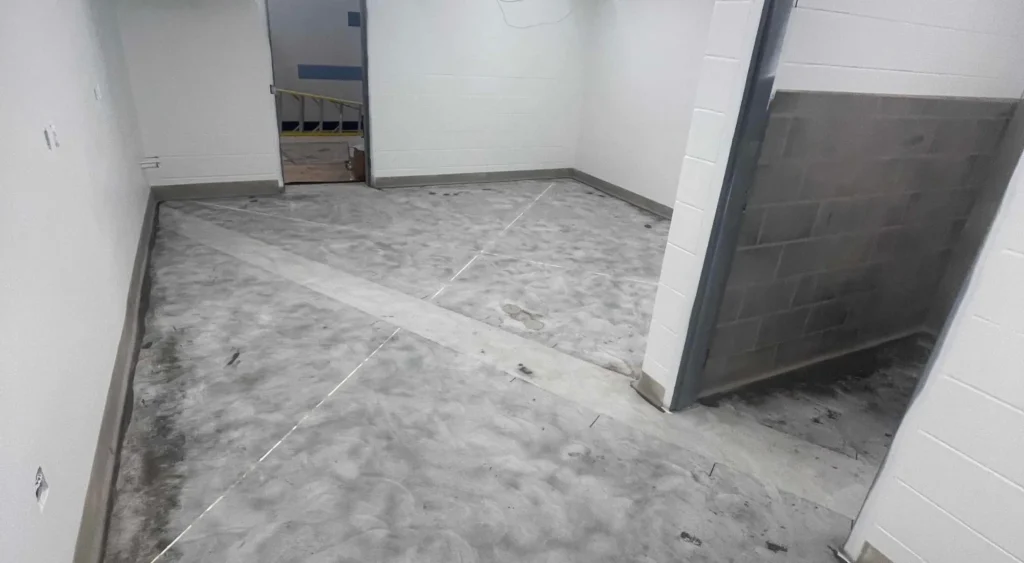
Treadwell Offers Commercial Epoxy Floor Coating Removal, Installation, and Replacement
Do you need a trusted professional to help you with an epoxy solution for your space? Look no further. Our team at Treadwell specializes in epoxy flooring for commercial spaces.
Our reliability and consistency, as well as our background in construction and our extensive experience allows us to help you find the best flooring solution for your business. Our respect for your timelines and understanding of the flooring requirements of various industries make us an ideal choice for your flooring needs.
Reach out today to get started on your flooring project!
Start A Conversation
I am raw html block.
Click edit button to change this html
