
Epoxy Flooring Installation: How It’s Done and How Long It Takes
You’re picturing a neat, new epoxy floor for your place of business, something a bit more elegant than the plain, stained concrete that’s been there for years. But how much downtime can you permit your business? How long does it take to install epoxy flooring?
You can get a fairly accurate estimate of the time your space will be out of commission by considering the pertinent variables.
Treadwell discusses the details that influence the length of time required for epoxy flooring installation as well as the installation process itself, so you can make the right decisions regarding scheduling and budgeting for new epoxy flooring.
Table of Contents
What Is Epoxy and Why Is It a Popular Flooring Option?
Epoxy is a synthetic resin used in various industries, like construction, manufacturing, aerospace, and more, to create a strong and durable solid surface.
It is an excellent choice for flooring because of its:
- Ease of maintenance
- Durability, even under heavy loads
- Resistance to stains, fading, and chemicals
- Ability to hide imperfections
- Glossy surface
- Reinforcing capabilities
Treadwell delights in sharing this reliable flooring option with our clients. And when we install this floor for your commercial space, you can be doubly sure the craftsmanship is first-rate.

How Long Does It Take To Do Epoxy Flooring?
Timing for epoxy flooring installation varies depending on several factors, including the square footage to be covered (and what percentage of that is walls), the type of epoxy, the condition of the floor being covered, and the logistics of the company’s operation.
At Treadwell, most of our jobs can be installed in one week, but we can provide you with a more accurate time frame after we’ve inspected the premises and understand your business’s constraints on our available working times.
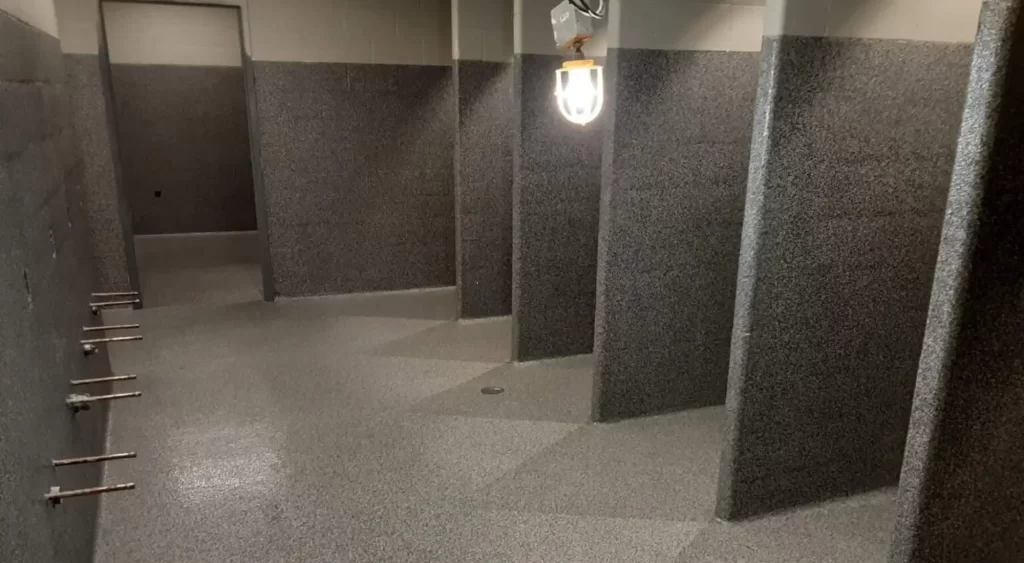
5 Factors That Affect How Long It Takes To Install an Epoxy Floor
#1: Size and Layout of the Floor
Epoxy flooring installation is carried out in several steps that require precision and care. The more ground that has to be covered, the longer each step will take, and the whole process may be significantly longer or shorter depending on the square footage.
Layout makes a big difference, too. Any irregularity in the shape of the room and any walls dividing the space make installation more complex and time-consuming.
#2: Condition of the Subfloor
The first step in any epoxy flooring installation involves evaluating the condition of the subfloor. Gouges or cracks are not only unsightly, but they also make for inadequate adhesion of the flooring material. Any flaws will need to be repaired and/or filled in with epoxy patching material. A floor needing minimal preparation will take less time to prepare for installation.
#3: Phasing
Professional epoxy flooring installers can work efficiently and quickly to create your new commercial floor. If they are permitted to do their work without constraints on their available time, the job will be completed in a relatively short period.
Some businesses, however, need the work done in phases so as not to hinder the operation of their business, so they give installation professionals a certain window of time during the day or week during which they may work. This necessary limitation extends the time for installation, but it is sometimes the preferred, more cost-effective route to take.
#4: Type of Epoxy Used
There are three broad categories of epoxy floor coating systems: solvent-based, water-based, and 100% solids. The first two types have a pot life of about two hours, so they must be laid down within that time. 100% solids epoxy systems have an even shorter pot life. They will begin to harden within 30–40 minutes, making it essential that experienced professionals like the team at Treadwell perform the installation.
Within these general categories, there is also a variety of epoxy flooring types uniquely suited to the needs of different work environments. Each of these has properties that affect the timing of application and drying/curing:
- Terrazzo
- Flake coating
- Self-levelling
- Antistatic
- And more
#5: Addition of Special Features
The unique characteristics may be built into the epoxy mixture, or they may need to be added in a distinct step. For example, to achieve a non-slip finish, installation professionals can proceed in either of two ways:
- Add an aggregate like quartz or aluminum oxide to the final coat.
- Sprinkle the grit over the surface of the final layer of epoxy before sealing with a finish layer.
Adding color flakes for decorative and practical effects (traction) is usually done by way of the second method. Other additives may be included to modify the performance and appearance of the finished floor.
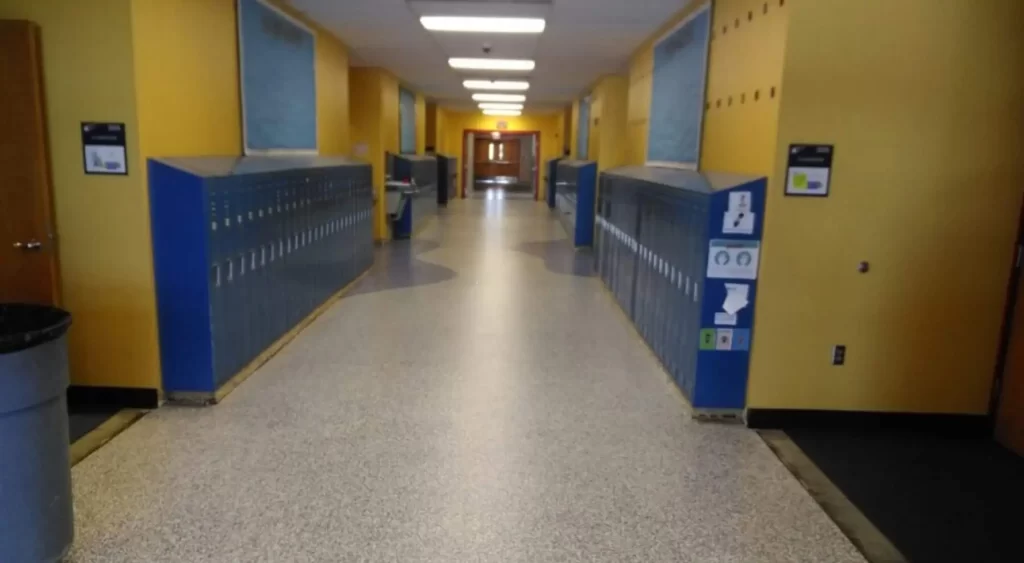
How To Install Epoxy Flooring: 3 Steps
Each step of epoxy flooring installation is essential to creating a fully functional and appealing floor that will last through the years.
#1: Decontamination & Surface Preparation
Grease or dirt is removed from the floor, and any gouges or cracks in the concrete are patched or repaired. Then the surface is prepared to receive the epoxy coating. In order for the epoxy to adhere properly, the surface must be slightly textured. This is often done by shotblasting, a process that also helps clean the floor.
Shotblasting creates a profiled surface and takes only a fraction of the time sanding requires. The amount of texturing needed depends on the thickness of the epoxy coating to be applied.
#2: Applying Coats & Chip Flakes
The following coats each serve a critical purpose:
- Primer coat: This first coat aids in adhesion and seals the prepared floor so that upper layers are not weakened by trapped air. This coat is usually applied with a squeegee to fill in voids in the floor, and a roller is used to smooth out lines left by the squeegee.
- Intermediate coat: Made up of resins and aggregates, this coat accounts for most of the floor’s thickness. Viscosity varies depending on the type of epoxy. Coatings and slurries can be sprinkled with an aggregate (such as chip flakes) for added texture and aesthetic effect.
- Finish coat: This seal layer contains chemicals and resins that add certain features such as UV resistance, gloss, waterproofing, etc.
#3: Curing Time
Curing time is often confused with drying time, but there is an important difference. When the floor feels dry to the touch, it is not necessarily cured. While there is some variation among different types of epoxy coatings, general guidelines for resuming activity on the newly installed floor are as follows:
- 12-24 hours: The surface can be walked on.
- 48-72 hours: You may move light furniture back in, but don’t drag anything across the floor.
- 7 days: The floor is fully cured and can withstand heavy traffic, such as cars, machinery, etc.
Temperature and humidity levels also influence curing time. Fans and dehumidifiers can speed up the process, but the space should be kept fairly warm at about 70 degrees. Professionals understand the importance of thin layers to ensure an even cure. While it may be tempting to lay the coating on thickly, it will prove counterproductive in the end. Call Treadwell today to ensure that your new epoxy floor is worth the investment.
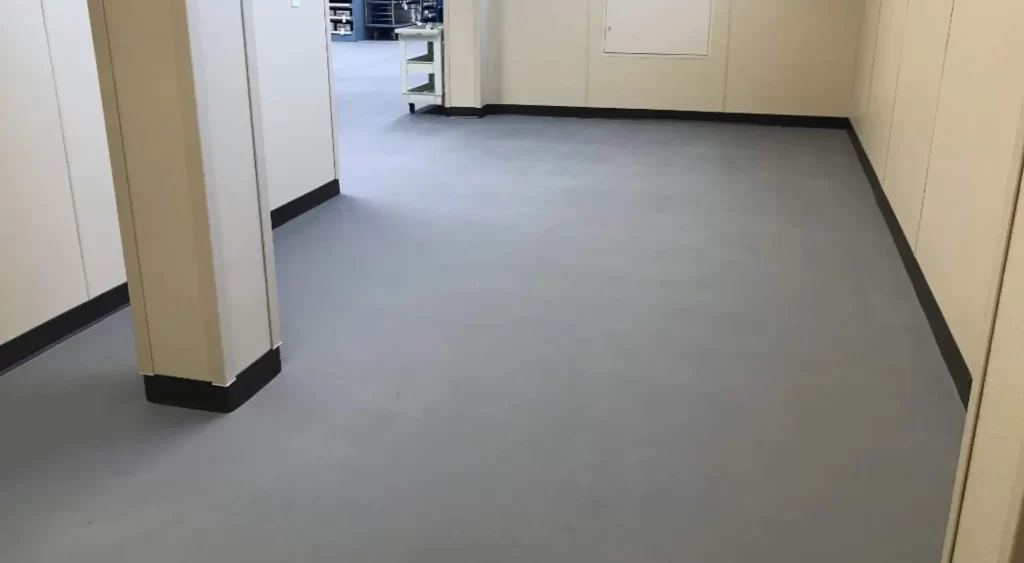
Treadwell: Installing Commercial Epoxy Flooring in Kansas City and Surrounding Areas
Treadwell performs high-quality installation of epoxy floors for industrial spaces. We’ll evaluate your space and give you our professional recommendation on optimum flooring materials. While we work efficiently, we take great care that no steps are omitted and that you receive the best product in the epoxy flooring market.
After an initial consultation, we’ll provide a quote and then carry out the installation according to your scheduling needs. Give us a call today to learn why we are the best flooring company to serve your business.
