
NO SPARKS, NO SURPRISES: UNDERSTANDING ANTI-STATIC EPOXY FLOORING
Choosing the right anti-static epoxy flooring can feel complicated, especially when you’re balancing safety requirements, equipment sensitivity, and budget considerations. You may be unsure about which system will best protect your space.
At Treadwell, we help businesses across industries design and install epoxy floors that go beyond appearance — they perform where it matters most. Anti-static systems are a prime example, protecting both people and equipment in environments where even a minor electrical discharge could cause major issues.
In this guide, we’ll explain how anti-static epoxy flooring works, which industries rely on it most, and what the installation process involves. By the end, you’ll have the clarity you need to choose the right flooring system for your facility.
Table of Contents

What Is an Anti-Static Floor?
An anti-static floor is a specially designed flooring system that helps control the buildup and discharge of static electricity. In many environments, even a small electrostatic discharge can damage sensitive equipment, interfere with operations, or pose a safety risk.
Anti-static flooring prevents this by safely grounding electrical charges, either by dissipating them at a controlled rate or by conducting them directly to a grounding point. The result is a safer, more stable surface that protects both people and technology.
Several types of flooring materials can be made anti-static. Epoxy resin is one of the most popular options because it offers a seamless, durable surface that can incorporate conductive or dissipative additives directly into the system. Other materials include vinyl, rubber, and carpet tiles with embedded carbon fibers or conductive backing layers designed to reduce static buildup. Some industries also use urethane or tile systems, depending on their performance needs and maintenance preferences.
The key difference between anti-static and standard flooring lies in how they manage electrical charges. Traditional floors allow static to accumulate as people walk or equipment moves across the surface. In contrast, anti-static floors are engineered to control that charge from the moment it forms, ensuring it’s safely transferred away from the surface. This makes them essential in environments where precision, safety, and reliability are non-negotiable.
Is All Epoxy Flooring Anti-Static?
No. Epoxy floors can be formulated to be anti-static or static-dissipative, depending on the specific additives or conductive materials incorporated during the application process.
Normally, epoxy flooring is a non-conductive material that can allow static charges to build up. Adding resins, carbon-based additives, or metallic compounds makes epoxy flooring anti-static because these materials help dissipate electricity.
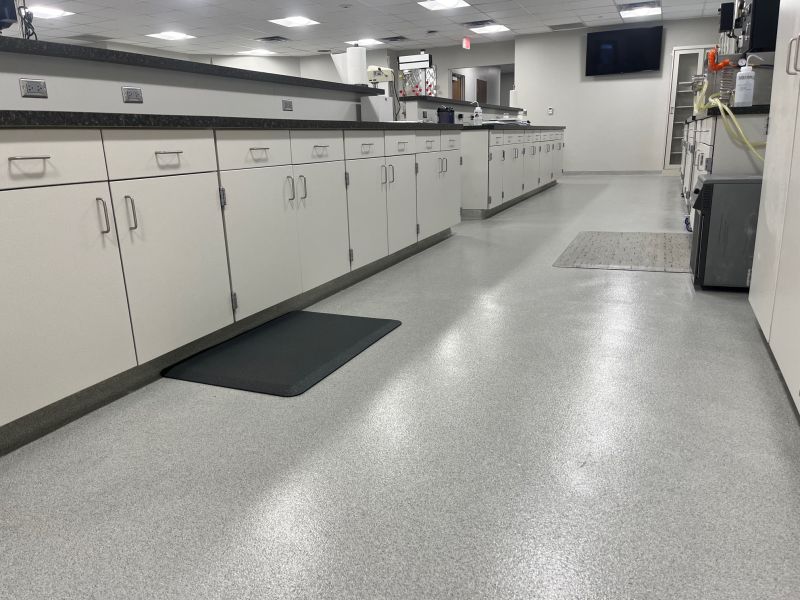
An anti-static epoxy floor coating is commonly used in clean rooms, areas where electronics are manufactured, or where static control is essential.
Industries That Rely on Anti-Static Epoxy Flooring
Anti-static epoxy flooring is essential for industries where static electricity can pose significant risks to both workers and sensitive equipment. These are some of the most common industries that benefit from anti-static epoxy flooring:
- Electronics manufacturing: This industry requires strict control of static electricity to avoid damaging delicate devices used in the production of microchips, circuit boards, and other electronic components.
- Semiconductor industry: Since small electrostatic discharges can cause irreparable damage during the manufacturing of chips and circuits, anti-static flooring is critical.
- Pharmaceuticals: Clean rooms in pharmaceutical manufacturing require static control to prevent contamination and ensure the product’s quality will not be affected, especially for medications and sterile equipment.
- Data centers or information technology facilities: These house critical IT infrastructure. Anti-static flooring helps protect servers and other electronic equipment from potential damage due to static electricity and the dryness of the air in this type of location.
- Medical device manufacturing: Since medical devices often contain delicate electronics, anti-static flooring is used in manufacturing areas to prevent damage and ensure the product’s reliability and safety.
- Automotive industry: In automotive electronics manufacturing, anti-static flooring helps protect sensitive components in electrical systems, sensors, and control units.
- Research labs: Sensitive equipment used in laboratories, such as microscopes or testing devices, relies heavily on anti-static flooring to maintain an environment that will not affect them and their research results.
How Is Anti-Static Epoxy Flooring Installed?
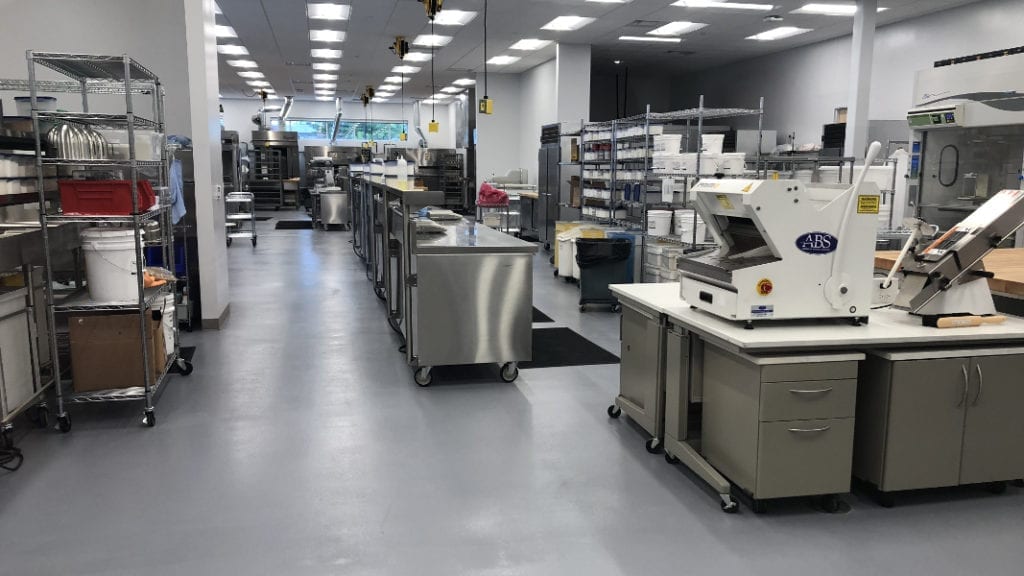
The installation of anti-static epoxy flooring is extremely important to ensure its effectiveness at dissipating static electricity.
For the best results and to guarantee proper installation, reach out to Treadwell’s team of skilled professionals. Our experts can ensure your flooring is installed correctly, providing you with long-lasting protection and optimal performance.
Floor Preparation
The existing floor must be thoroughly cleaned and prepared to ensure proper adhesion of the epoxy. This includes removing old coatings, dirt, dust, grease, and any other particles that may interfere with the proper application of the products.
In some cases, the surface may need to be ground or shot-blasted to create a rough texture where the epoxy can bond more effectively.
Laying Copper Tape
Copper tape serves as a conductive pathway to direct static electricity away from the floor’s surface and into the grounding system. After the floor is prepped, we ground it by running copper tape to an electrical outlet or a metal column. The tape is secured to the grounding point, then run vertically to the surface and laid horizontally across the floor.
Given the critical importance of proper grounding, it is crucial that you reach out to experts to ensure the effectiveness and safety of your flooring installation. The skilled professionals at Treadwell have years of experience with anti-static epoxy flooring and will ensure that all codes and guidelines are followed, including a sufficient number of grounding locations for the square footage of the space.
Applying Primer and Body Coats
A primer is applied to the prepared surface to improve the adhesion of the epoxy coating. This can also contain anti-static properties depending on the requirements of the facility.
Primers normally contain several components to facilitate their application, adherence, and resistance to the flooring. Some of these components include:
- Epoxy resin: This provides a strong adhesive bond with the anti-static topcoat. Resin makes the flooring durable and resistant to wear.
- Conductive additives: Additives are incorporated to help control and dissipate static charges. The conductive materials allow the primer to create a path for electrostatic discharge to flow safely to the ground.
- Filler materials: Additional components may be aggregated to enhance the texture, help with leveling, and improve the bonding capabilities of the materials.
Testing
Testing is the most important step in the anti-static epoxy flooring installation process. We use specific testing equipment that measures the conductivity or resistance in ohms. The device sits on the floor with probes that make contact and give readings about the amount of static detected. As long as you’re within specified limits, the floor is safe as an anti-static surface.
Testing is extremely important. If the floor hasn’t been installed correctly, the results could be devastating to your business and its equipment. You can trust the experts at Treadwell to get the job done right the first time!

What Are the Two Main Types of Anti-Static Flooring Systems?
ESD (Electrostatic Discharge) Dissipative and ESD Conductive are types of flooring designed to protect sensitive electronic equipment from static electricity.
ESD is specially designed to dissipate static electricity by directing it away from sensitive areas where it could damage devices such as IT servers.
On the other hand, ESD Conductive flooring is designed to control static electricity rather than dissipate it. Because it does not allow an immediate discharge, it ensures an environment where electrostatic charges are kept within safe limits. Although both are important, they technically serve different purposes based on the level of static control required.
At Treadwell, we primarily install ESD anti-static epoxy flooring systems, but if your job requires an ESD Conductive option, we can source the required materials to make this happen.
Partner With Treadwell for Expert Anti-Static Flooring Solutions
If you are thinking about getting anti-static epoxy flooring in Kansas City or the surrounding areas, you can trust the team at Treadwell.
We are here to help you create a safe, static-controlled environment. Our installation process involves precise steps that require the best materials, trained professionals, and years of experience.
Treadwell can install the perfect anti-static epoxy flooring that adapts entirely to your needs. Contact us today to get started.
